What Is the Meaning of Ummah in Islam?
We hear the word Ummah a lot at sermons, in conferences, and across community discussions. But have you ever stopped to think about what this word truly means?
Many of the issues facing Muslims today arise because so many of us have started focusing strictly on personal goals and private achievements, showing little care for the pain or hardship experienced by the person living next door.
This individualistic mindset directly contradicts the teachings of Prophet Muhammad (peace be upon him). He described this connection clearly when he said:
“The parable of the believers in their affection, mercy, and compassion for one another is that of a single body. When any limb aches, the whole body reacts with sleeplessness and fever.” (Sahih al-Bukhari 6011)
So what is the meaning of Ummah in Islam, and how are we as individuals an active part of it?
Let’s find out.
Linguistic and Quranic Meaning Of Ummah In Islam
The word Ummah comes from the root letters A-M-M (أ-م-م), which carries deep meaning regarding origin, guidance, and collective purpose.
This same root forms the word Umm, which means mother. Just as a mother gives birth, nurtures, and protects her child, an Ummah provides shelter, moral nourishment, and a sense of belonging to every member within it.
The root letters also form the word Imam, meaning a leader or a guide who stands at the front to lead others in prayer and action. Therefore, the linguistic origin of Ummah combines the nurturing care of a mother with the ethical direction of a leader.
How the Quran Uses the Term
In the Quran, Allah uses the term Ummah in several distinct ways, showing that its definition extends far beyond a simple political or geographic boundary.
First, the Quran uses Ummah to describe a global community of faith. In Surah Al-Anbiya, Allah states:
“Indeed, this community of yours is one community, and I am your Lord, so worship Me.” (Surah Al-Anbiya 21:92)
Here, the term establishes a bond among all believers who share the same fundamental purpose.
Second, the Quran uses the word to describe an individual who embodies the virtues of an entire community. Describing Prophet Ibrahim (peace be upon him), Allah says:
“Indeed, Abraham was a nation [Ummah] obedient to Allah, devoutly obedient, and he was not of those who associate partners with Allah.” (Surah An-Nahl 16:120)
This usage demonstrates that a single person can carry the conviction, moral weight, and leadership of an entire community when standing firmly upon truth.
Third, the Quran uses Ummah to refer to a specific period of time or generation, as seen in Surah Yusuf (12:45).
Looking at these Quranic usages reveals what is Ummah at its core. It’s not defined by bloodlines, borders, or shared language. It’s a purpose-driven community bound together by shared belief, ethical direction, and mutual responsibility.
The Principle of Islamic Brotherhood and Global Unity
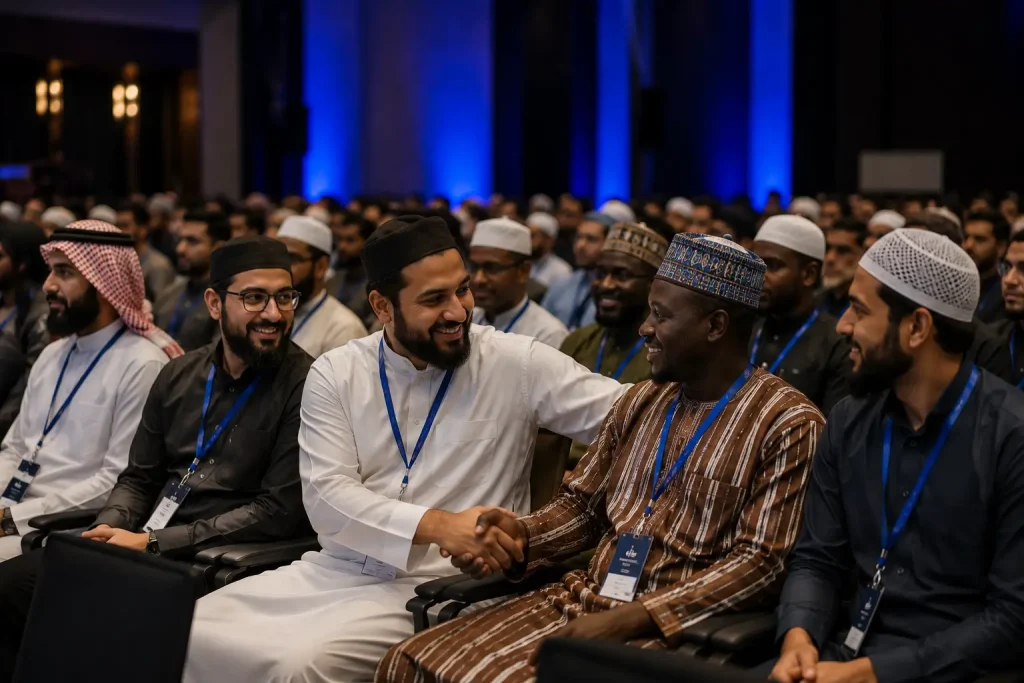
Surah Al-Hujurat establishes that spiritual kinship forms an essential duty among believers:
“The believers are but brothers, so make peace between your brothers. And fear Allah that you may receive mercy.” (Surah Al-Hujurat 49:10)
This verse commands active reconciliation and mutual care as a direct requirement of faith.
Prophet Muhammad (peace be upon him) reinforced this principle during the Farewell Pilgrimage by explicitly stating that an Arab holds no superiority over a non-Arab, nor a white person over a black person, except through piety and good action.
When believers honor this divine mandate, cultural divisions lose their influence. Prioritizing spiritual brotherhood creates the foundation for the long-term unity of the Ummah, reminding every person that individual choices ripple across the entire Ummah.
Active Empathy and Mutual Protection
True Islamic brotherhood demands concrete action rather than passive sentiment. Feeling compassion for fellow believers means standing against injustice, relieving poverty, and actively protecting vulnerable members of society.
When one part of the global community suffers, every believer shares the moral obligation to respond. Fulfilling this duty transforms private worship into collective strength, ensuring no member faces trials alone while upholding the true mandate of Ummah in Islam.
The Purpose and Responsibility of the Muslim Ummah
A clear understanding of the Muslim Ummah meaning requires looking beyond shared identity to examine its core purpose.
In Islam, a community does not exist merely for social companionship or self-preservation. It exists to fulfill a specific ethical mission in the world.
The Mandate of Moral Service
The Quran outlines the global mission of believers in Surah Ali ‘Imran:
“You are the best nation produced for mankind. You enjoin what is right and forbid what is wrong and believe in Allah.” (Surah Ali ‘Imran 3:110)
This verse clarifies that distinction in faith is tied directly to moral action. Being part of the Ummah is an active responsibility, requiring every believer to promote good and resist harm in their daily lives.
When people neglect this duty, the community loses its direction. Fulfilling the true Muslim Ummah meaning requires taking personal accountability for the moral and social health of society.
Practical Ways to Serve Humanity and Stand for Justice
Serving humanity and standing for justice are not ideals meant only for leaders or scholars. Every individual can put these principles into practice through daily actions:
- Practicing Everyday Fairness
Stand for justice by refusing to participate in bribery, favoritism, or dishonest business practices. Pay employees and workers fairly on time, and speak up when a classmate, colleague, or neighbor is treated unfairly.
- Using Skills to Help Others:
Turn your professional or academic skills into a community benefit. Tutors can teach underprivileged students, medical professionals can offer guidance to families in need, and tech builders can create tools that solve local challenges.
- Caring for Your Immediate Neighbors:
Check on people living near you regardless of their background. Share meals, assist elderly neighbors with errands, and offer help during personal or community hardships.
- Supporting Relief and Advocacy:
Dedicate a portion of your income and time to organizations that relieve poverty, protect orphans, and defend victims of oppression globally and locally.
Establishing ethical standards, defending the vulnerable, and offering practical help form the core of a genuine vision for the Ummah. By taking small, consistent actions each day, every reader can demonstrate the compassion at the heart of Islamic teachings and fulfill their collective duty on earth.
How Faith & Future: Beyond Self Brings the Vision of the Ummah to Life
Understanding the principles behind the Ummah is a crucial first step, but knowledge alone remains incomplete without application. Community revival happens when believers create intentional spaces to convert Islamic principles into daily action.
Faith & Future Summit brings this concept to life by connecting scholars, educators, students, and professionals in a shared effort to serve others.
Bridging Scholarship and Practical Action
The upcoming summit, Beyond Self: A Vision for the Ummah directly addresses the challenges facing believers attempting to navigate modern individualism.
Organized jointly by the School of Islamic Scholars & Leaders (SISL) and Al-Kawthar University, this initiative offers clear direction on bridging traditional scholarship with everyday responsibilities.
The keynote sessions provide direct guidance on making this transition:
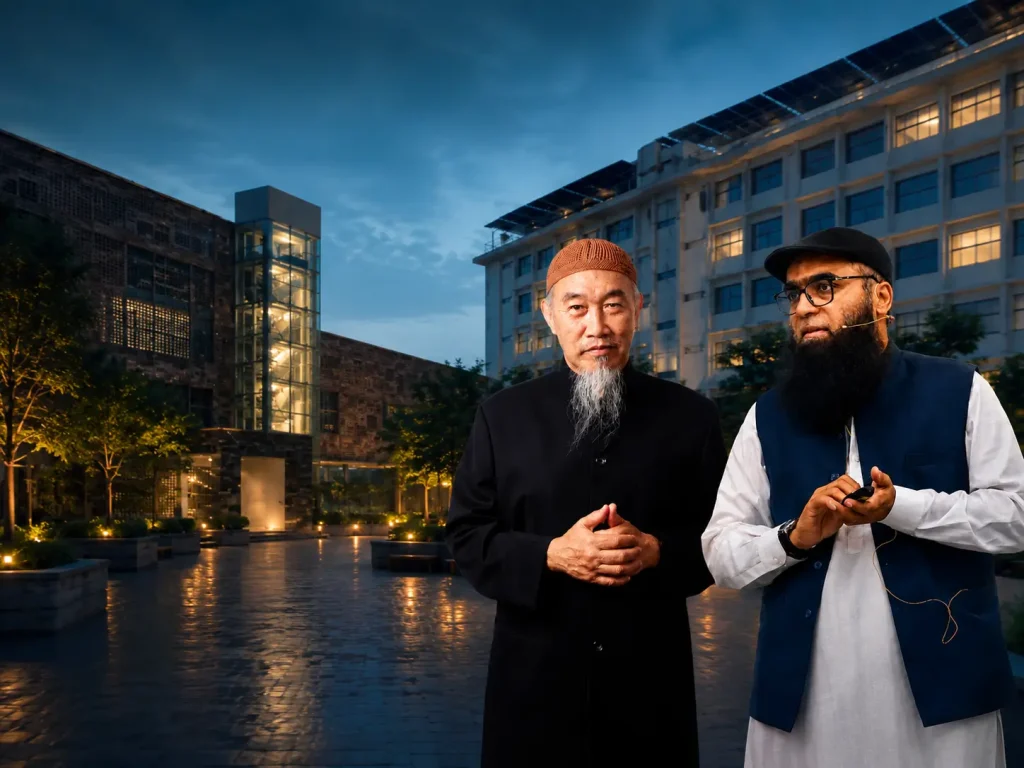
- Sheikh Hussain Yee (“What Will Outlive You?”):
Challenges you to look closely at where your life is headed, urging you to invest in the spiritual and moral well-being of generations you may never meet.
- Sheikh Kashif Naseem Dilkusha (“From ‘Me’ to ‘We’: Reviving the Ummah’s Collective Spirit”):
Focuses on the precise mindset shift required to move past self-interest and re-anchor your goals in collective responsibility.
By bringing these scholars together, the initiative helps you align personal ambition with a broader vision for the Ummah, turning private faith into meaningful, long-term impact.
Why Understanding the Ummah Matters for Future Generations
The choices made by one generation directly shape the moral, spiritual, and social environment inherited by the next. Understanding the true meaning of Ummah in Islam offers a vital counterweight to isolation, hyper-individualism, and social fragmentation.
Countering Isolation and Building Intergenerational Strength
Modern culture often encourages people to view life as a solo journey focused strictly on personal branding, wealth accumulation, and individual comfort. When people live in isolation, social ties weaken and community support systems collapse.
Re-anchoring your identity in the Ummah shifts your focus toward collective strength. It reminds you that you are a guardian of values, knowledge, and resources that must be preserved and passed forward.
Building strong families, supporting educational centers, and creating reliable social networks ensure that young Muslims grow up with a grounded identity and a clear sense of belonging.
Reframing Success for the Akhirah
Understanding your place within the collective body changes how you define personal achievement. True success is not measured solely by financial standing or professional titles, but by the positive contribution your life leaves behind for others.
When you align your daily ambitions with the well-being of the community, your efforts gain lasting value. Investing time, wealth, and skills into work that serves others converts temporary achievements into an enduring investment for your Akhirah.
This perspective ensures that future generations inherit a strong foundation built on faith, justice, and service.
Living Beyond Self for the Ummah
The meaning of Ummah in Islam is far more than an abstract topic you hear in lectures or read in books. It’s a daily call for you to take responsibility, care for others, and put your faith into practice.
When you shift your perspective from strictly chasing personal goals to helping your community, your daily work, your studies, and your personal plans gain deeper meaning. Rebuilding this shared strength requires you to link authentic Islamic knowledge with simple, daily actions.
The Faith & Future: Beyond Self summit serve as an anchor for you when you look for clear direction. By bringing scholars, educators, and professionals together to solve everyday challenges through a Prophetic lens, the summit gives you a solid starting point to understand and live out what it truly means to be an active, contributing member of the global Ummah.
Frequently Asked Questions About the Muslim Ummah
What is the literal and technical meaning of Ummah in Islam?
Literally, the word Ummah comes from the Arabic root letters A-M-M, which form the words for mother (Umm) and leader (Imam). Technically, the meaning of Ummah in Islam refers to the global community of believers united by faith, moral responsibility, and devotion to Allah, transcending geographic borders, race, and language.
How does the Quran define the Muslim Ummah?
The Quran defines the Ummah as a purpose-driven community created to fulfill an ethical mission. In Surah Ali ‘Imran (3:110), Allah describes believers as a community produced for mankind to promote good, resist harm, and maintain faith in Allah.
What is the concept of Islamic brotherhood within the Ummah?
Islamic brotherhood refers to the spiritual kinship that connects all Muslims worldwide. As taught by Prophet Muhammad (peace be upon him), this bond is like a single human body; when one part experiences pain or hardship, the rest of the body responds with wakefulness and concern.
Does belonging to the Ummah replace national citizenship?
No. Belonging to the Ummah provides a shared moral identity and spiritual connection, while citizenship relates to civic laws, national duties, and regional governance. A Muslim can be a law-abiding, contributing citizen of any country while maintaining a sincere spiritual bond with the global community of believers.
Can a single person be considered an Ummah in Islam?
Yes. In Surah An-Nahl (16:120), Prophet Ibrahim (peace be upon him) is explicitly described as an Ummah. This usage shows that a single individual who stands firmly upon truth, moral courage, and devotion can carry the spiritual weight and leadership of an entire community.
Can non-Muslims be part of an Ummah?
Yes. In the Constitution of Medina established by Prophet Muhammad (peace be upon him), the term Ummah was used in a civic context to include allied non-Muslim tribes. They shared equal rights, mutual protection, and civic responsibilities alongside the Muslim community while maintaining their own religious freedoms.
What is the main difference between an Ummah and a nation?
A conventional nation is defined by political borders, geographical territory, or shared language. An Ummah is defined by shared belief, moral responsibility, and a global spiritual identity that crosses all physical and political boundaries.
How can an individual contribute to the strength of the Ummah today?
An individual contributes by shifting from private isolation to active service. This includes practicing honesty in business, using professional skills to solve local community problems, standing up for justice, supporting poverty relief, and raising an ethical family.