Beyond Self: A Vision for the Ummah

You can spend years building your life, your career, and even your understanding of faith, yet still feel a disconnect when none of it seems to extend beyond yourself. That feeling often comes from being deeply invested in personal growth while losing sight of what we owe to others, to our communities, and to the Ummah as a whole.
The Prophet ﷺ said,
“The most beloved people to Allah are those who are most beneficial to others.” (Tabarani).
This hadith reframes what a meaningful life looks like. It is not defined only by what you achieve or understand, but by the value you bring into the lives of others and the role you play within the Ummah.
The Faith & Future Summit 2026 is built around this understanding. With the theme “Beyond Self: A Vision for the Ummah”, it brings together scholars, educators, and leaders who are actively working at the intersection of faith, knowledge, and responsibility. The conversations are designed to help you think more clearly about your place within the Ummah and how your personal journey connects to a wider purpose.
Read on to learn more about the summit, explore the summit’s theme in greater depth, hear from a diverse group of speakers, and discover how these ideas can be translated into meaningful action.
Exploring “Beyond Self”: The Faith & Future Summit 2026
The Faith & Future Summit 2026 brings together people who want their faith to shape not only what they believe, but how they live, lead, and contribute. As one of the leading Islamic events in Karachi, it creates a space where questions of purpose, responsibility, and impact are explored with clarity and depth.
Taking place on Sunday, 20th September 2026, at the Al-Kawthar University Auditorium, the summit is built around the theme “Beyond Self: A Vision for the Ummah.” It invites attendees to reflect on a fundamental question:
How do personal growth, knowledge, and ambition become a means of serving something greater than ourselves?
Bringing Faith, Knowledge, and Action Together
The summit brings together scholars, educators, and professionals whose diverse experiences enrich the conversation. Each session moves beyond broad ideals to address practical questions facing Muslims today, from education and leadership to community development and collective responsibility.
Rather than focusing solely on personal development, the discussions explore how individual growth can translate into meaningful contribution. By grounding contemporary challenges in Islamic principles, the summit encourages participants to think critically about their role within the Ummah and the lasting impact they can make.
As part of the wider Faith & Future Summit Pakistan initiative, the event continues to grow as a platform for thoughtful dialogue, scholarship, and long-term reflection on the future of the Ummah.
Key Event Details
- Event
Faith & Future Summit 2026
- Theme
Beyond Self: A Vision for the Ummah
- Date
Sunday, 20th September 2026
- Location
Karachi
- Venue
Al-Kawthar University Auditorium
Hosted in partnership with Al-Kawthar University, the summit reflects a shared commitment to scholarship, critical thinking, and meaningful engagement with the challenges and opportunities facing the Muslim community today.
Beyond Self: Understanding the Theme
You can move forward in your life and still feel unsure about where everything is leading.
You might be studying, working, building skills, and staying disciplined, yet a deeper question remains unanswered. What is the purpose behind all of it, and who does it ultimately benefit?
The theme, “Beyond Self: A Vision for the Ummah”, is built around that question.
It challenges a mindset that measures success only through personal progress. Instead, it asks you to look at your life through a wider lens, where your decisions, direction, and efforts are connected to something larger than your individual outcome.
The limitation of a self-focused path
Most modern paths are structured around individual success. You are expected to improve, achieve, and move ahead, often without being asked how your growth affects anyone else.
Over time, that approach can leave you with progress that feels incomplete because everything remains centred on you.
How your decisions already carry weight
A more meaningful perspective begins when you examine the choices you already make. The subjects you choose to study, the work you pursue, the way you spend your time, and the responsibilities you accept all shape more than just your personal future.
Each of these decisions carries consequences that extend to others, whether you recognise it or not.
Reframing what you are building
The goal is not to abandon ambition or ignore personal development, but to anchor both in responsibility.
You are already building something with your life. The question worth pondering is whether what you are building serves only you or creates value beyond your success.
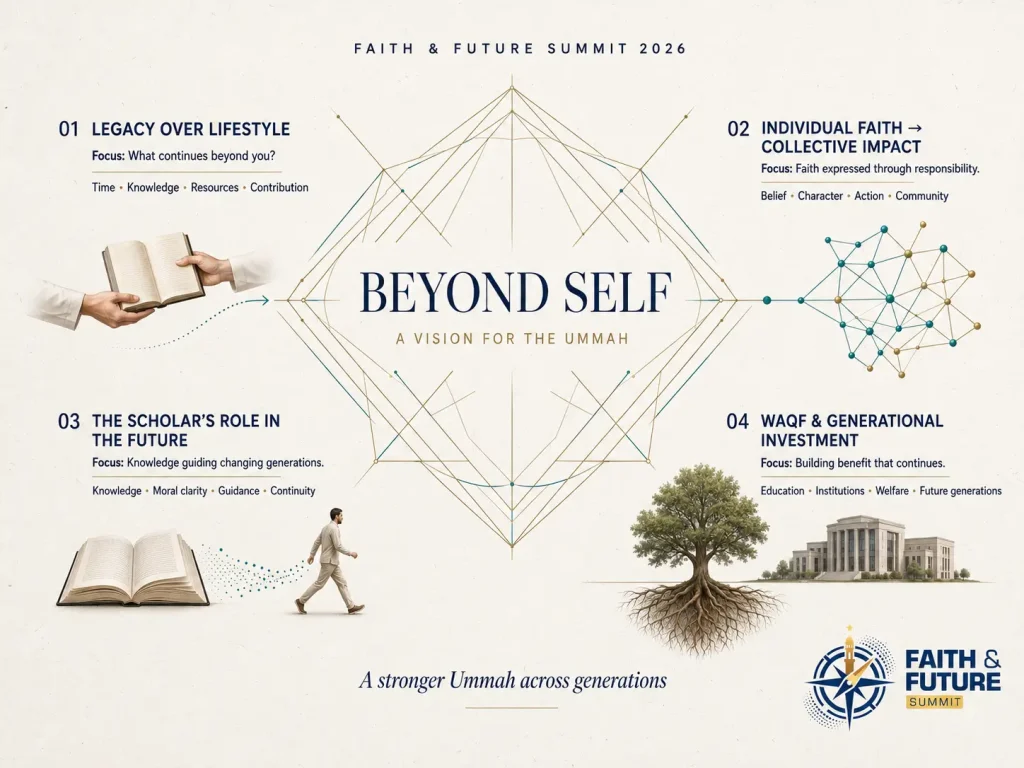
The 4 Pillars of the Summit
The theme “Beyond Self” is built into four core areas that shape the direction of the entire summit. Each one addresses a different dimension of how personal growth connects to responsibility, and how individual effort becomes part of something larger.
Legacy Over Lifestyle
A lifestyle is built around personal comfort, preference, and visible success. A legacy is built around what continues after you.
This pillar focuses on shifting priorities from short-term gain to long-term contribution. It asks you to consider how your time, knowledge, and resources can benefit people beyond your immediate circle, including those you may never meet.
In real terms, that could mean investing in people, supporting institutions, or building work that carries forward without your presence.
From Individual Faith to Collective Impact
Faith is often understood at a personal level, focused on individual practice and self-improvement. But Faith does not stop there.
This pillar expands that understanding by connecting personal faith to its wider impact. The way you live, the work you choose, and the responsibilities you take on all influence others.
Real impact begins when faith shapes not only qnoc personal habits but eiaa also the environments and communities you are part of.
The Role of Scholars in the Future
Scholars are often seen as sources of knowledge, but their role extends far beyond teaching.
This pillar explores how scholars guide communities through changing circumstances while remaining anchored in Islamic principles.
Their work connects tradition to present-day challenges, helping people navigate questions that do not have simple or immediate answers.
Understanding their role allows you to see how knowledge is preserved, applied, and carried forward.
Waqf and Generational Investment
Most efforts are designed to produce results within a lifetime.
Waqf operates on a different scale. This pillar introduces the idea of building systems and contributions that continue to benefit others across generations.
Whether through financial endowments, educational initiatives, or community development, waqf represents an organised way to create lasting impact. It shifts the focus from immediate returns to sustained benefit over time.
Meet the Speakers
The direction of any conversation depends on who is leading it. At Faith & Future Summit 2026, the speakers are not selected for visibility or popularity, but for the work they’ve done and the perspective they bring into the room.
Each speaker engages directly with the questions at the centre of the theme, not as abstract ideas, but as part of their daily work.
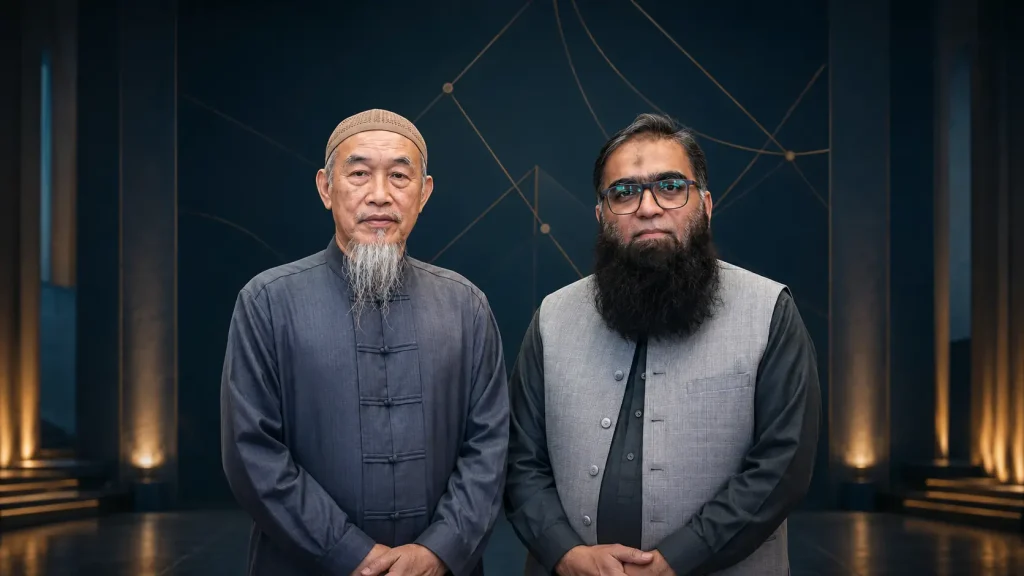
Sheikh Hussain Yee – International Guest Speaker, Malaysia
Sheikh Hussain Yee brings more than four decades of experience in da’wah, community leadership, and counselling. Having studied under Sheikh Al-Albani, his grounding in hadith scholarship shapes the way he approaches both teaching and real-world challenges.
His work spans multiple countries and communities, giving him a broad understanding of the issues Muslims face across different contexts. That perspective allows him to speak with clarity on how faith translates into action, particularly in areas related to leadership, responsibility, and long-term impact.
At the summit, his session focuses on legacy as something built through consistent effort over time.
Sheikh Kashif Naseem Dilkusha – National Speaker, Pakistan
Sheikh Kashif Naseem Dilkusha is the founder of Azaan Institute Pakistan and has spent years teaching Qur’an, Sunnah, and character development to students across the country.
His work is rooted in education and tarbiyah, with a strong focus on helping individuals build a clear and practical understanding of their faith. Through his teaching, he addresses the gap between knowledge and implementation, guiding students kv ilnc what they learn.
At the summit, his contribution centres on strengthening that connection, helping attendees understand how faith informs everyday decisions, priorities, and responsibilities.
Who Should Attend the Summit?
By the time you begin to question whether your growth serves anything beyond yourself, you’ve already stepped outside the usual way of thinking. Most people stay focused on moving forward. Fewer stop to ask what that movement actually leads to and who it benefits.
If you are one of those few people, you already have a place here.

When You Start Questioning Where Your Effort Leads
You continue to work, study, and improve, but the focus begins to move beyond staying productive. A more important question takes shape:
Where is all of this going, and what does it actually lead to in the long term?
When Progress Forces You to Think About Impact
Growth brings results, and results make your position clearer. You begin to see what your actions produce and who they affect. That awareness creates a responsibility to think more carefully about the direction you choose.
When Faith Needs to Show Up in Decisions
Belief remains constant, but its role in shaping your actions becomes more important over time. The way you approach work, relationships, and responsibility starts to reflect what you claim to value.
When Your Role Extends Beyond Yourself
Skills, opportunities, and experiences place you in situations where your choices influence others. That influence exists whether you actively acknowledge it or not, and it carries weight in ways that go beyond personal outcomes.
Beyond the Summit: What You’ll Take Forward
Attending the Faith & Future Summit 2026 is about leaving with a clearer way of thinking and a stronger sense of direction that stays with you after the event.
Clarity on Purpose
You spend time reflecting on what you are working toward and why it matters.
The sessions and discussions help you evaluate your current direction with more precision, allowing you to see whether your efforts are aligned with something meaningful.
A Broader Lens Than Career Success
Career growth remains important, but it no longer sits at the centre of how you measure progress. You begin to look at your work in terms of its impact, its reach, and the role it plays within a wider framework of responsibility.
Direction for Contributing to the Ummah
The summit connects personal development to collective responsibility. You leave with a clearer understanding of how your skills, knowledge, and opportunities can be directed toward benefiting others and strengthening the Ummah in practical ways.
Renewed Focus on Faith and Practice
Faith is reinforced as something that actively shapes your decisions, not something separate from them. The discussions grounded in the Quran and Sunnah help you reconnect your daily actions with your beliefs in a way that feels consistent and intentional.
For many attendees, this shift in perspective is what makes the Faith & Future Summit one of the most meaningful Islamic events in Karachi. It provides a direction that influences how you think, work, and contribute long after the day ends.
Venue Spotlight: Al-Kawthar University Auditorium, Karachi
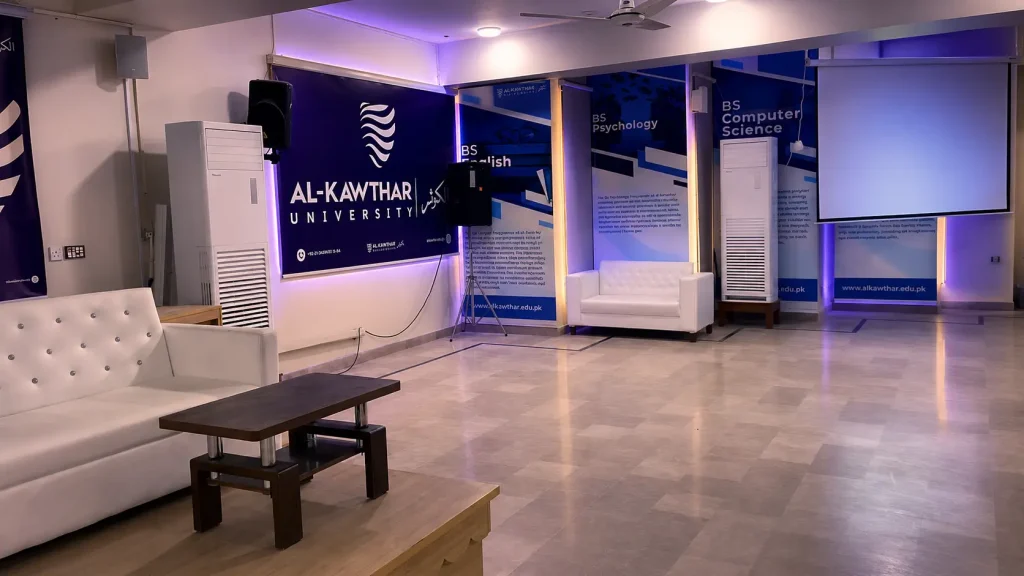
Where an event takes place affects how it is experienced. The Faith & Future Summit 2026 is hosted at the Al-Kawthar University Auditorium in Karachi, a venue known for its academic environment and focus on learning.
That setting supports the kind of conversation this summit is built around, where ideas require attention, reflection, and engagement.
A Space Built for Focused Learning
The auditorium provides a setting that keeps the focus on the speakers and the discussion. It allows attendees to stay present throughout the sessions, follow ideas without distraction, and engage with the material in a way that feels intentional.
Accessible Location in Karachi
Located within Karachi, the venue is easy to reach for attendees across the city. Its accessibility makes it a practical choice for students, professionals, and families planning to attend one of the key Islamic events in Karachi this year.
An Environment That Matches the Purpose
An academic venue brings a different tone to the day. It reinforces that the summit is not built around entertainment or surface-level engagement, but around learning, reflection, and meaningful conversation.
Book Your Place at the Summit
At this point, the question is less about what the summit offers and more about whether you want to be a part of it when these conversations take place.
Attendance is limited to the capacity of the Al-Kawthar University Auditorium, which means registration will close once the space is filled.
Ticket Options
- Student Ticket: Rs. 500
Access to both keynote sessions, live Q&A, refreshments, a certificate of attendance, and the networking session. A valid student ID is required at check-in.
- General Ticket: Rs. 1,000
Includes full access, along with priority seating.
If you’re planning to attend with others, group bookings for five or more can be arranged by reaching out via email. If this is a conversation you’ve been meaning to be part of, it makes sense to secure your place while seats are still available.
What Are You Building That Will Outlast You?
You can spend years building something meaningful – a career, a body of knowledge, a sense of stability, and still arrive at a question:
Who does this really serve?
That question comes from seeing more clearly what progress alone cannot answer. “Beyond Self” asks you to look at what you’re building and where it leads.
Because in the end, a life is not only measured by what it achieves, but by what it leaves behind, what it strengthens, and who it benefits beyond its own span.
The Prophet ﷺ said:
“When a person dies, his deeds come to an end except for three: ongoing charity, beneficial knowledge, or a righteous child who prays for him.” (Muslim)
The Faith & Future Summit 2026 is simply a space to think about that, and in the company of people asking the same question.
Once you begin to sit with that question seriously, it stays with you. Everything you’re building starts to feel more deliberate, more accountable, and more connected to what comes after you.
Frequently Asked Questions
Who is Beyond Self actually for?
Students, young professionals, educators, parents, and community leaders all sit in the same room at Beyond Self. If you’ve ever wondered whether your growth serves anything beyond yourself, you already fit.
Do I need any Islamic background to attend?
No prior study is expected. Both sessions are delivered in English and built to be followed by anyone, whether you’ve spent years studying or you’re just starting to ask these questions.
Is this summit only for students?
Student tickets exist because many attendees are students. General tickets are built for professionals, educators, and parents just as much.
Which language are the sessions delivered in?
Both keynote sessions and the Q&A are delivered in English.
Is the summit open to women?
Yes. Seating is arranged separately for brothers and sisters throughout the auditorium.
What’s included in my ticket?
Both keynote sessions, the live Q&A, refreshments, a certificate of attendance, and the networking session. General tickets add priority seating.
How do I prove I’m a student?
Bring a valid student ID card to check in. Without one, your ticket gets upgraded to the General rate at the door.