Muslim Youth and Purpose: Finding Direction Through Faith

Muslim youth find purpose through faith by connecting their studies, career goals, relationships, and daily choices to intention and service to others. In Islam, a meaningful life involves building useful skills, fulfilling responsibilities to family, strengthening character, and using your abilities in ways that benefit the wider Ummah.
You can spend an entire semester preparing for exams, applying for internships, and improving your resume, and still find yourself awake at night wondering where all that effort is taking you.
A lot of students and young professionals know that feeling. You’re encouraged to work harder, plan ahead, build a successful career, and make your family proud.
At the same time, you’re comparing your progress with classmates, watching other people’s lives unfold on social media, and trying to keep up with expectations that never seem to end. Somewhere in the middle of all that pressure, the bigger question gets lost:
What are you actually working toward?
For Muslim youth and purpose, that question reaches beyond career plans or academic achievement. Faith gives your goals a direction by connecting everyday effort with intention, responsibility, and service. Studying, working, supporting your family, and developing useful skills all carry deeper meaning when you understand why you’re doing them and who you hope to benefit along the way.
Why Modern Life Leaves Young Muslims Feeling Disconnected
A lot of modern career advice focuses on getting ahead. Build the strongest profile, land the best opportunity, earn more, and keep moving toward the next milestone. Professional growth matters, but when grades, job titles, income, and achievements become the way you measure your progress, even success feels strangely unsatisfying.
A few pressures make that feeling harder to ignore:
- `The comparison trap on social media
You open your feed and see someone announcing a new job, moving abroad, getting married, or reaching a milestone you’re still working toward. After enough scrolling, someone else’s highlight reel starts influencing how you judge your own life.
- The pressure to have your future figured out
Students often feel expected to choose a degree, career path, and long-term plan before they’ve had enough experience to understand their strengths or interests. Every decision starts feeling permanent, which makes uncertainty far more stressful than it needs to be.
- Keeping faith separate from everyday goals
When salah, Quran, and other acts of worship sit apart from your studies, career, relationships, and responsibilities, faith starts feeling disconnected from the decisions that take up most of your day.
Islam gives young Muslims direction by bringing intention and responsibility into the goals they’re already pursuing. Your education, career, family duties, and personal development gain a clearer purpose when they’re connected to what you value, how you serve others, and the kind of person you’re trying to become.
Redefining Purpose in Islam: Beyond Titles and Wealth
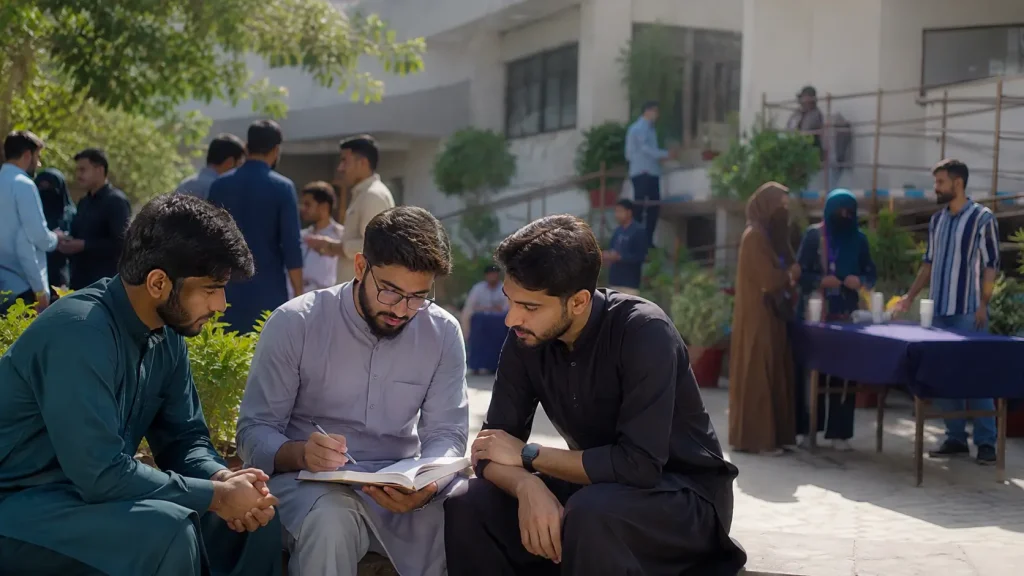
Job titles, salaries, and social status often become the easiest ways to measure whether life is going well. Purpose in Islam asks you to look deeper, at the intention behind your effort, the way you treat people, and whether what you’re building brings genuine benefit.
Allah says in the Qur’an:
“And I did not create the jinn and mankind except to worship Me.” (Adh-Dhariyat, 51:56)
Worship reaches far beyond salah and time spent in the masjid. Everyday responsibilities also carry meaning when they’re approached with sincere intention and carried out in a way that pleases Allah.
| How Islam Frames Ambition and Success | |
| Success by Status | Success with Purpose |
| Driven by external validation | Driven by sincere intention |
| Measures success by status | Measures success by benefit |
| Ends with personal comfort | Extends into a continuous legacy |
Looking at your routine through that lens changes the question from
“How quickly am I getting ahead?”
to,
“What am I becoming through the effort I make every day?”
Studies and work then become part of building the knowledge, discipline, and ability needed to contribute well.
Bringing Purpose Into Study and Work
Direction rarely arrives through one realization. It develops through the choices you repeat, especially on the days when motivation is low. For students dealing with exams, applications, deadlines, and uncertainty about the future, Islamic principles give everyday effort a clearer focus.
1. Build Your Day Around the Five Daily Prayers
Salah gives your day natural points to stop, refocus, and remember what matters beyond the task in front of you. Planning study sessions, classes, work, and other responsibilities around the five prayers also helps prevent hours from disappearing into scrolling or procrastination.
Instead of treating prayer as something to fit around a busy schedule, let it guide how you plan the day. You still have deadlines to meet, but your schedule begins to reflect both your responsibilities and your worship.
2. Replace Perfectionism with Ihsan
A lot of young Muslims get stuck because every choice feels like it has to be the perfect one. The right degree, the right internship, the right career, and the right plan for the next five years start carrying more pressure than they deserve.
Ihsan brings your attention back to the quality of the effort in front of you. Prepare properly, act with integrity, learn from mistakes, and give the task the care it deserves. Outcomes remain with Allah, while your responsibility lies in how sincerely and responsibly you approach the work.
3. Build Discipline Through Small Commitments
Big goals quickly become frustrating when your everyday habits don’t support them. Consistent study periods, fewer hours lost to mindless scrolling, keeping promises, sleeping at sensible times, and finishing the work you said you would do all build reliability over time.
Motivation will rise and fall, which is why discipline matters. The connection between faith, discipline, and purpose for young Muslims offers a useful way to understand how spiritual intention and consistent habits reinforce one another over the long term.
Navigating Career Choices, Studies, and Family Expectations
Career decisions often become more complicated when your own interests don’t fully match what your family expects. Many parents encourage fields such as medicine, engineering, law, or finance because they associate them with stability and long-term security.
Their concerns usually come from wanting a dependable future for you, even when their preferred path doesn’t feel like the right fit.
Working through that tension requires patience, preparation, and sound Islamic guidance for youth. A few principles help make those conversations more productive:
- Combine Istikharah with consultation:
When you’re choosing a degree, considering an internship, or thinking about a career change, pray Istikharah and speak with people who understand the field.
Experienced professionals, teachers, and mentors give you practical insights difficult to get from courses or online research alone.
- Give your family something concrete to consider:
If you’re interested in a less traditional career, explain what the path actually involves. Research the qualifications, likely costs, job prospects, income expectations, and steps you’ll need to take. A thoughtful plan gives the conversation more substance than simply saying you’re passionate about something.
- Keep respect at the centre of difficult conversations:
Disagreement with your parents doesn’t require hostility or avoidance. Listen to their concerns, explain your reasoning clearly, and give the conversation time if needed. Consistency in your work and decisions often builds trust more effectively than trying to win every discussion immediately.
- Build skills that travel with you:
Communication, problem-solving, technical ability, writing, teamwork, and reliability remain useful across industries. Developing those skills gives you more options as your interests grow and the job market changes.
A career decision rarely comes down to choosing between pleasing your family and following your own interests. The stronger path usually involves understanding your responsibilities, researching your options properly, and making a decision you’re prepared to work for with sincerity and discipline.
Using Your Growth to Benefit Others
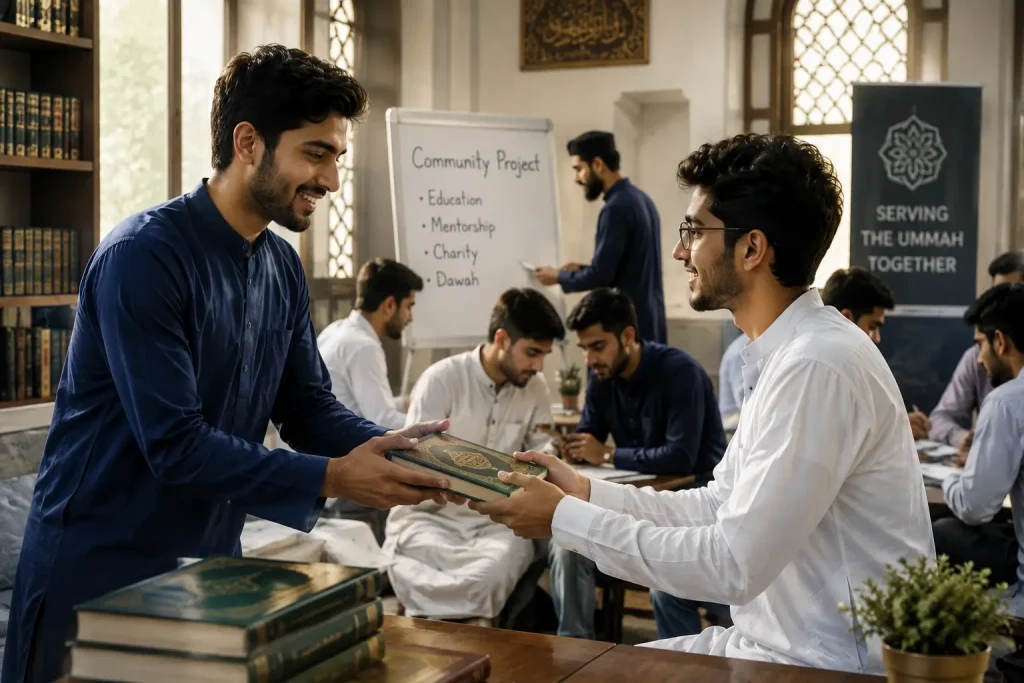
Personal growth matters most when what you learn and develop benefits the people beyond yourself. Your education, skills, time, and experience all give you ways to contribute to the people and communities around you.
The Prophet Muhammad ﷺ said:
“The most beloved people to Allah are those who are most beneficial to others.” (al-Tabarani)
That principle gives ambition a wider purpose. A degree prepares you to solve problems with greater knowledge. Professional skills give you something useful to offer. Even a few hours of your time might help a younger student, support a local initiative, or make someone else’s path a little easier.
You also don’t need to wait until you graduate, earn more, or reach a particular career milestone before contributing.
Understanding the broader role of Muslim youth in the Ummah helps you see your current stage of life as a period where you’re already able to learn, serve, take responsibility, and become more useful to the people around you.
| Weekly Direction Check | |
| Clarify your intention | Write down why your work matters. |
| Review your screen time | Cut back on distracting feeds. |
| Strengthen your circle | Spend time with people who grow. |
| Contribute somewhere | Use one skill to help someone. |
- Notice the content you consume online:
Pay attention to the apps, creators, and group chats that leave you comparing your life with everyone else’s. Unfollow what repeatedly drains your attention and make more space for people and resources that help you learn, think, and grow.
- Reconnect your work with Intention:
Before studying, starting a project, or beginning your workday, remind yourself why the effort matters. Your intention might include supporting your family, developing useful knowledge, serving others well, or making responsible use of the opportunities Allah has given you.
Returning to that intention gives ordinary tasks a clearer purpose.
- Learn from people whose lives you respect:
Look for teachers, older students, professionals, or mentors who combine competence with good character. Ask how they made difficult decisions, handled setbacks, and balanced ambition with their responsibilities. Their experience gives you perspective that’s difficult to build through online advice alone.
- Put one of your skills to use for someone else:
You don’t need a major project to start contributing. Tutor a younger student, help with an initiative at your local masjid, support a community project, or offer a skill you already have. Taking useful action often gives you more clarity about your strengths and priorities than spending another week thinking about what your purpose should look like.
Taking the Conversation Further at the Faith & Future Summit
Questions about purpose rarely end once you’ve chosen a degree or found a job. You still have to think about the kind of career you want to build, what success means to you, how faith influences your decisions, and what you hope your work contributes beyond your own life.
Those are some of the questions at the heart of the Faith & Future Summit 2026. Under the theme “Beyond Self: A Vision for the Ummah,” the summit brings young Muslims together with scholars and educators to explore faith, responsibility, leadership, and the role each person plays in strengthening the wider community.
The summit takes place on Sunday, 20 September 2026, at Al-Kawthar University in Karachi, with featured speakers including Shaykh Hussain Yee and Shaykh Kashif Naseem Dilkusha.
If the questions in this article have made you think more seriously about where your studies, career, and abilities are taking you, you’ll find plenty to reflect on alongside other young Muslims asking similar questions. If you’re ready to take that conversation beyond the page, attend the Faith & Future Summit 2026 and explore what a more purposeful future could look like.
Building a Life With Purpose
Purpose grows through the choices you make every day. The way you study, work, treat your family, use your time, and respond to responsibility all shape the kind of life you’re building.
For Muslim youth and purpose, faith gives those choices a clear direction. Your degree becomes more than a qualification when you intend to use your knowledge well. Your career carries greater meaning when it helps you support others and contribute something useful. Even small acts of discipline and service build the character you’ll rely on later in life.
You don’t need to have your entire future figured out right now. Focus on becoming someone who learns seriously, works with integrity, fulfils their responsibilities, and uses what Allah has given them to benefit others. A meaningful life is built through those choices, one day at a time.
Frequently Asked Questions
How do I know whether my career aligns with my purpose in Islam?
Start by looking at the work, how you earn, and what your career allows you to contribute. A halal profession, carried out honestly and used to support yourself, your family, and others, fits naturally within a life guided by faith.
What should I do when I lose motivation for my studies?
Start by reconnecting with why your studies matter to you. Break large workloads into smaller goals, plan your day around the five daily prayers, reduce distractions, and spend time with people who encourage you to keep going. Muslim student motivation often grows through consistent habits rather than waiting to feel inspired again.
How do young Muslims deal with comparison and FOMO on social media?
Remember that you’re usually comparing your everyday life with someone else’s selected moments. Limiting the accounts and apps that repeatedly trigger comparison gives you more attention for your own responsibilities. Practising gratitude, spending more time with people offline, and getting involved in your local community also help you measure progress by what you’re actually building instead of what appears on your feed.
How do I balance religious commitments with university or a demanding job?
Build your schedule with your religious responsibilities already in mind. Plan classes, study sessions, meetings, and breaks around salah wherever possible, and use smaller parts of the day for dhikr, Quran, or reflection. Meeting your responsibilities honestly, respecting other people’s rights, and doing your work well also shape how you live your values throughout the day.
How should I discuss career choices with traditional parents?
Go into the conversation prepared to understand their concerns and explain your plans. Parents often focus on stability, financial security, and long-term prospects because they’re thinking about the risks you might face later. If you’re considering a less familiar career path, bring them information about qualifications, costs, job prospects, and how you plan to support yourself.
How does Islam view ambition and financial success for young professionals?
Islam gives ambition direction through intention, ethics, and responsibility. Earning well, developing expertise, and progressing professionally all have value when the income is lawful and the pursuit doesn’t come at the expense of religious duties or other people’s rights. For Muslim youth and purpose, financial success also creates opportunities to support family, give generously, strengthen communities, and use professional influence beneficially.