Identity Crisis Among Muslim Youth
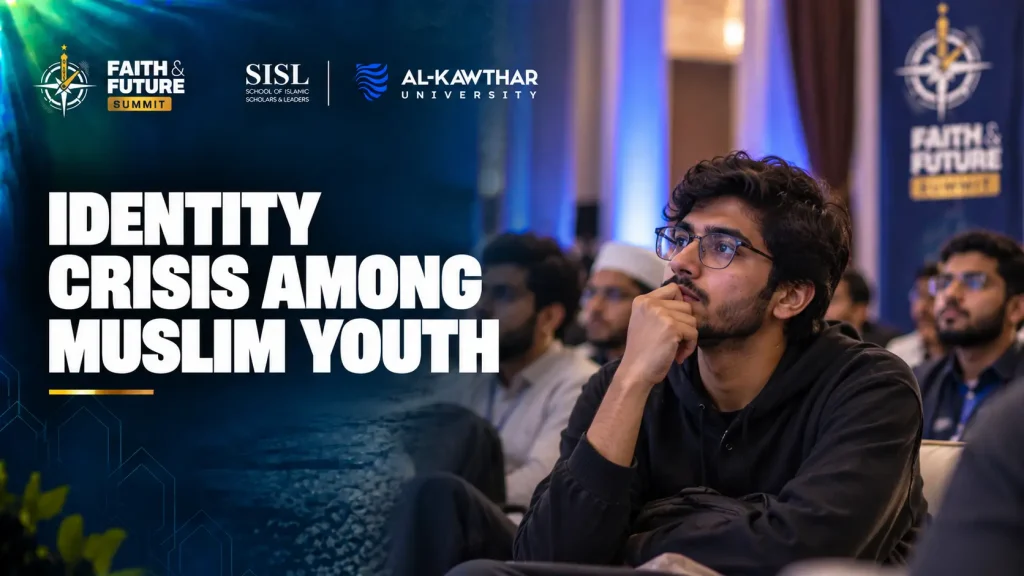
A Muslim identity crisis occurs when someone struggles to reconcile Islamic beliefs with social expectations, creating uncertainty about their faith and sense of belonging.
- Faith and Identity: Conflicting cultural expectations sometimes leave young Muslims uncertain about expressing their religious beliefs.
- Social Pressure: The desire for acceptance among peers often influences how individuals practise their faith publicly.
- Digital Influences: Exposure to conflicting online perspectives raises questions about Islamic teachings and personal values.
- Finding Clarity: Seeking authentic Islamic knowledge and guidance from knowledgeable scholars supports a stronger understanding of one’s identity.
Belonging becomes complicated when you feel the need to explain your faith everywhere you go. Among friends, you might hesitate to express a religious belief because you’re worried about being judged.
At home, asking sincere questions about Islamic teachings might invite criticism when all you’re looking for is a better understanding. For many young Muslims, these conflicting expectations contribute to a Muslim identity crisis.
The desire for social acceptance sometimes clashes with deeply held beliefs, leaving you uncertain about how openly to practise your faith. Online debates add another layer to these faith challenges, especially when cultural expectations are presented as religious obligations.
Recognising the pressures behind an identity crisis is an important starting point for building a relationship with your faith that comes from understanding and personal conviction.
Why Young Muslims Struggle with Their Identity
Developing a strong religious identity becomes difficult when the people around you hold conflicting expectations about how you should live. For some young Muslims, the pressure comes from family traditions that seem disconnected from Islamic teachings.
Others struggle with social environments where expressing religious beliefs invites uncomfortable questions or criticism. Understanding the factors behind a Muslim identity crisis is important because the source of confusion isn’t always the same for everyone.
When Cultural Traditions Are Mistaken for Religious Obligations
Growing up in a Muslim household often means learning religious practices alongside customs passed down through generations. Over time, the distinction between Islamic teachings and family traditions sometimes becomes difficult to recognise.
Consider a young person questioning a cultural expectation surrounding marriage or career choices. Their family might interpret the question as disrespect towards religion, even when the concern relates to a tradition that has no clear basis in Islamic teachings.
Such experiences create unnecessary tension between young people and their families.
Understanding the difference requires learning directly from the Quran and Sunnah while respecting the place of beneficial cultural practices. When you understand the religious basis of a particular expectation, you’re better equipped to discuss disagreements thoughtfully and recognise which obligations Islam actually establishes.
How Social Media Influences Religious Identity
Social media constantly exposes young people to different ideas about what constitutes a successful or desirable life.
A student scrolling through Instagram might see peers celebrating expensive purchases or professional achievements. Repeated exposure to carefully selected moments from other people’s lives sometimes creates pressure to pursue similar goals, even when those goals conflict with personal values.
Religious discussions online introduce another challenge. Short videos and emotionally charged debates frequently present complex theological questions without sufficient explanation.
When conflicting opinions appear equally convincing, deciding which information deserves trust becomes difficult.
Developing greater awareness of how online content influences your thinking is therefore important. Seeking explanations from knowledgeable scholars and examining the context behind religious claims offers a more reliable basis for forming your views.
When Questions About Faith Go Unanswered
University education often introduces questions about religion that students haven’t previously considered. Discussions about scientific theories or different philosophical perspectives might prompt someone to examine beliefs they’ve held since childhood.
Asking these questions is part of seeking understanding. However, young Muslims sometimes hesitate to discuss their uncertainties because they fear being judged by family members or religious teachers.
When genuine questions receive dismissive responses, confusion often remains unresolved.
Addressing wider Muslim youth challenges requires conversations where young people feel comfortable expressing uncertainty and receive thoughtful explanations grounded in authentic Islamic knowledge.
A sincere question deserves an informed response, particularly when someone is making a genuine effort to understand their faith.
How Conflicting Expectations Affect Your Sense of Belonging
Moving between different social environments naturally involves adjusting how you communicate. The difficulty arises when those adjustments begin to conflict with your beliefs or leave you feeling unable to express your concerns openly.
For some young Muslims, the pressure to meet expectations at university differs considerably from what they experience within their families.
The Pressure of Competing Expectations
| Public and Social Expectations | Family and Domestic Expectations |
| Feeling pressured to downplay religious practices | Following family customs without understanding their basis |
| Adapting behaviour to gain acceptance | Hesitating to express genuine religious questions |
| Seeking approval from friends or colleagues | Worrying about parental disappointment |
| Experiencing guilt over personal compromises | Feeling misunderstood when expressing concerns |
These experiences differ between individuals, and many young Muslims maintain healthy relationships across both environments.
However, when someone repeatedly feels compelled to conceal important aspects of their beliefs, maintaining those relationships becomes more demanding.
Feeling Divided Between Different Environments
Imagine spending your university day avoiding conversations about religion because you expect disagreement. Later, at home, you find yourself agreeing with religious opinions you haven’t fully understood because you’re concerned about upsetting your parents.
Eventually, you begin questioning where you feel comfortable expressing your genuine thoughts.
Living with conflicting expectations sometimes creates emotional strain, particularly when someone lacks supportive relationships where they can discuss their concerns.
Developing a stronger sense of identity involves recognising which expectations reflect your personal convictions and which you’ve accepted primarily to maintain social approval.
When Religious Practice Begins to Feel Difficult
Unresolved questions about faith sometimes influence a person’s relationship with worship.
Someone who previously approached Salah with enthusiasm might begin struggling to maintain consistency. Others find themselves participating in religious activities primarily because of family expectations, without feeling personally connected to what they’re doing.
Such experiences deserve thoughtful attention. Examining what has changed in your relationship with worship offers an opportunity to identify the questions or difficulties affecting your motivation.
For students managing academic responsibilities, balancing faith and education also requires making practical decisions about how religious commitments fit into daily schedules.
A stronger connection with faith develops through understanding its significance and establishing habits that remain manageable alongside other responsibilities.
Finding Clarity Through Fitrah and Personal Conviction
When your understanding of Islam comes primarily from the expectations of others, disagreements or unfamiliar questions sometimes leave you uncertain about what you genuinely believe.
Islamic teachings provide an important starting point for examining these concerns through Fitrah, the natural disposition with which Allah created human beings.
Understanding Your Fitrah
The Quran establishes the relationship between human nature and faith:
“So direct your face toward the religion, inclining to truth. [Adhere to] the fitrah of Allah upon which He has created [all] people…” – (Surah Ar-Rum 30:30)
In Islamic theology, Fitrah refers to the innate disposition Allah has placed within human beings, including their natural inclination towards recognising their Creator. Understanding this concept encourages you to examine your beliefs with sincerity and consider how Islamic teachings guide your understanding of life’s purpose.
Questions and uncertainties still deserve careful examination. Returning to Islamic knowledge provides a foundation for that process, particularly when conflicting messages have made it difficult to distinguish religious principles from social expectations.
Moving from Inherited Faith to Informed Conviction (Tahqiq)
Many Muslims first learn about Islam through their parents. They become familiar with Salah and other religious obligations long before they’ve studied the reasoning behind them.
As they grow older, unfamiliar ideas and experiences often prompt deeper questions about those teachings.
Developing informed conviction involves examining Islamic beliefs through reliable knowledge while remaining open to learning from qualified scholars.
For example, someone questioning the authenticity of the Quran would benefit from studying its preservation and transmission through recognised Islamic scholarship.
The same approach applies when exploring theological questions concerning the existence of Allah or the life of Prophet Muhammad (peace be upon him). Engaging seriously with these subjects allows your religious understanding to develop beyond the familiarity of childhood practices.
Remaining Confident When Your Beliefs Set You Apart
Practising Islam sometimes means making choices that differ from those of your friends or colleagues. You might decline an activity because it conflicts with your religious commitments or face questions about a personal decision guided by faith.
The Prophet Muhammad (peace be upon him) offered reassurance to believers who experience such circumstances:
“Islam began as something strange and will return to being strange as it began, so give glad tidings to the strangers.” – (Sahih Muslim 145)
Remaining committed to Islamic teachings requires conviction, particularly when following those teachings brings social pressure.
At the same time, maintaining your religious identity doesn’t require withdrawing from people who hold different beliefs. Respectful relationships provide opportunities for understanding while allowing you to remain committed to your principles.
Developing faith, discipline, and purpose for young Muslims also involves establishing personal habits that reflect those convictions.
As your understanding deepens, your decisions become increasingly grounded in what you’ve learned and sincerely believe, giving you a clearer basis for navigating unfamiliar situations.
Practical Ways to Strengthen Your Muslim Identity
Understanding the pressures behind a Muslim identity crisis is an important beginning. Finding your way through those pressures also depends on the support you receive from the people involved in your daily life.
Young Muslims have a responsibility to pursue knowledge and reflect on their beliefs, while parents and educators influence whether those efforts receive encouragement or criticism.
For Young Muslims: Develop Habits That Support Your Convictions
Building confidence in your faith takes consistent effort. You don’t need to resolve every intellectual question immediately, although making time for meaningful learning gives those questions the attention they deserve.
A few practices worth developing include:
- Choose Supportive Companionship (Suhbah):
Spend time with friends who respect your religious commitments and encourage you to make responsible choices. Meaningful friendships also involve being comfortable discussing concerns without feeling pressured to agree on everything.
- Maintain Your Daily Prayers:
Protect time for Salah alongside your academic and professional commitments. Establishing consistency allows worship to remain part of your routine even during demanding periods.
- Study Islam Beyond Social Media:
If a particular religious question concerns you, explore it through reliable Islamic scholarship. Attending courses or learning directly from qualified teachers provides opportunities to examine subjects in greater depth than short online discussions generally allow.
The role of youth in Islam also carries responsibilities towards the wider community. Your education and developing abilities provide opportunities to contribute meaningfully while continuing to strengthen your relationship with Allah.
For Parents: Supporting Your Child Through Questions About Faith
When your teenager begins questioning something they’ve practised since childhood, your initial response often determines whether they’ll feel comfortable discussing similar concerns in the future.
A question about religious obligations deserves attention, even when you’re uncertain how to answer it.
Consider asking what prompted the concern before offering an explanation. Understanding whether your child encountered an unfamiliar idea at university or experienced a disagreement with friends gives you a clearer picture of what they’re trying to understand.
Parents should also distinguish family expectations from religious obligations. Explaining the Islamic basis of a particular practice encourages understanding, especially when cultural traditions have influenced how that practice is observed at home.
Your own conduct remains important throughout these conversations. Children notice how adults respond to disagreement, particularly when the subject involves personal beliefs.
For Educators: Take Young People’s Questions Seriously
Teachers and mentors often encounter questions that students hesitate to discuss elsewhere.
A student might raise a concern about an Islamic ruling or struggle to understand how a religious principle applies to a contemporary issue. Responding thoughtfully requires taking the question seriously and recognising when further scholarly guidance is necessary.
Educators should encourage students to examine evidence and understand the reasoning behind Islamic teachings. When a question falls outside their expertise, directing the student towards someone qualified to address it demonstrates intellectual responsibility.
Meaningful mentorship also involves recognising the pressures students face beyond their studies. Understanding their circumstances makes religious education more relevant to the decisions they encounter.
Exploring Questions of Faith at Faith & Future Summit
Some questions about faith deserve more time than everyday conversations allow. You might understand an Islamic teaching in principle yet struggle to apply it when your academic ambitions conflict with expectations at home.
At other times, hearing a knowledgeable scholar address a familiar concern from a different perspective changes how you approach it.
At Faith & Future Summit, Islamic scholarship connects with contemporary questions concerning education and the responsibilities Muslims carry towards society. Organised by the School of Islamic Scholars & Leaders (SISL) at Al-Kawthar University, the summit brings scholars and other experienced voices into conversations that are relevant to younger generations.
For students preparing for Faith & Future Summit, identifying the questions they genuinely want to explore gives greater purpose to their participation. Parents considering the summit alongside their children have an opportunity to engage with those concerns and better understand the challenges young Muslims encounter.
The value of these conversations continues beyond the sessions themselves. An unfamiliar perspective might encourage further study, while meeting others who take similar questions seriously provides encouragement to continue learning.
Have questions about your faith or the direction you want your life to take?
Explore Faith & Future Summit’s programmes and find opportunities to engage with scholars and people who share your interest in understanding Islam more deeply.
Finding Confidence in Your Own Convictions
Belonging doesn’t require everyone around you to share your beliefs. You can maintain meaningful relationships with people who think differently while remaining committed to the Islamic principles you value.
If you’ve been carrying an unanswered question about your faith, give yourself the opportunity to explore it properly. Seek knowledgeable guidance and remain willing to reconsider assumptions you’ve inherited without understanding.
A stronger Muslim identity develops as your understanding of Islam deepens and your decisions begin reflecting that conviction. The next step might be as simple as finally asking the question you’ve been hesitant to voice.
Frequently Asked Questions
Is experiencing doubts about faith a sign of weak belief?
Having sincere questions about Islam doesn’t automatically indicate weak faith. Some companions sought the Prophet Muhammad’s (peace be upon him) guidance about troubling thoughts (Sahih Muslim 132a). Although intrusive thoughts differ from intellectual questions, both deserve thoughtful attention appropriate to the concern.
How can young Muslims handle peer pressure in secular environments?
Begin by identifying the religious commitments you want to maintain and communicating your boundaries respectfully. You don’t need everyone’s agreement to remain confident in your choices. Supportive friendships also make it easier to navigate situations where your values differ from those of your peers.
How should parents respond when their teenager questions religious practices?
Listen carefully and ask what prompted the question before responding. Avoid treating every disagreement as disrespect. Where an explanation requires specialised Islamic knowledge, encourage your teenager to seek guidance from a qualified scholar and remain involved in the conversation.
Can someone maintain their cultural heritage while prioritising Islamic identity?
Yes. Islam recognises cultural diversity, and Muslims practise their faith across many different societies. Cultural traditions involving family relationships or community celebrations remain acceptable when they align with Islamic teachings. Understanding that distinction allows you to appreciate your heritage while respecting religious obligations.