Preparing Muslim Youth for Future Leadership
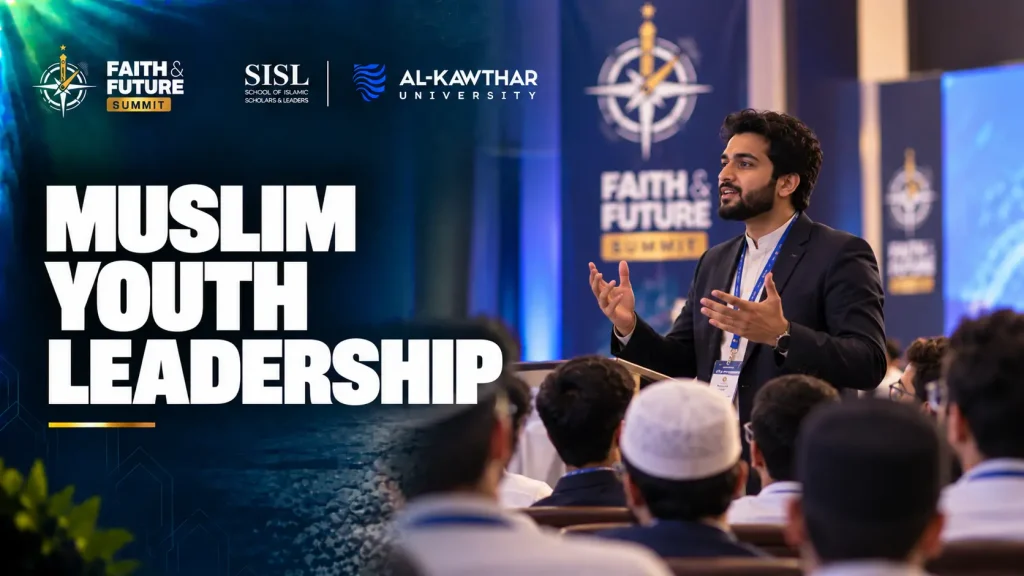
Muslim youth leadership prepares young Muslims to lead with Islamic values, develop practical skills, and take responsibility for improving their communities.
- Leadership Skills: Effective leadership requires sound judgement, communication, and the ability to make responsible decisions.
- Islamic Values: Taqwa (God-consciousness) guides young leaders towards honesty, justice, and accountability before Allah.
- Future Leaders: Education, mentorship, and practical experience prepare young Muslims to handle greater responsibilities.
- Community Service (Khidmah): Serving others encourages young leaders to identify community needs and contribute to meaningful solutions.
You’ve probably heard people say,
“Young Muslims are the future of the Ummah.”
It sounds inspiring, but what does that actually mean for you when you’re still completing your education, figuring out your career, and trying to find your own direction?
Maybe you’ve noticed something in your community that needs to change. Perhaps you’ve had an idea worth pursuing but held back because you felt too inexperienced to take responsibility. You want to contribute, yet you’re unsure whether you have what it takes to lead.
That’s where Muslim youth leadership becomes relevant to your life. Islam recognises the potential of young people to carry meaningful responsibilities, and the role of youth in Islam goes far beyond preparing for adulthood. Your decisions, commitments, and contributions already influence the people around you.
Developing leadership skills gives you the confidence to take those responsibilities seriously. You learn to handle disagreements, make fair decisions, and earn people’s trust while remaining conscious of your accountability before Allah.
The kind of leader you’ll become depends partly on what you’re willing to learn and take responsibility for today. And if you’re serious about becoming one of the Ummah’s future leaders, there’s an important question to consider:
What makes someone genuinely worthy of being trusted with leadership?
What Makes a Young Muslim Ready for Leadership?
Being trusted with an important responsibility feels encouraging until you realise that other people are depending on your decisions. You might have the enthusiasm to organise an event or manage a project, but enthusiasm alone won’t prepare you to handle every difficulty that follows.
The Quran offers valuable guidance on what makes someone worthy of responsibility. In the story of Prophet Musa (peace be upon him), one of the two women advises her father:
“Indeed, the best one you can hire is the strong and the trustworthy.” – (Surah Al-Qasas 28:26)
The verse highlights two qualities that remain essential to Muslim youth leadership: Al-Qawiyy (strength or capability) and Al-Amin (trustworthiness). Your abilities determine which responsibilities you’re equipped to handle, while your character influences how faithfully you fulfil them.
Developing Competence and Trustworthiness Together
| Professional Competence (Al-Qawiyy) | Moral Integrity (Al-Amin) |
| Developing expertise in your chosen field | Remaining conscious of Allah (Taqwa) |
| Planning work and meeting commitments | Communicating honestly about progress |
| Solving problems when difficulties arise | Protecting the trust others place in you |
| Managing responsibilities effectively | Using resources fairly and responsibly |
Consider a student appointed to manage the finances of a university society. Understanding budgets and maintaining accurate records requires practical ability. However, the position also demands honesty when handling money contributed by other students.
Both qualities influence whether that student deserves continued trust.
The same principle applies when you enter professional life. A software developer has a responsibility to produce reliable work, while a healthcare professional must maintain the standards necessary for patient safety. Whatever career you pursue, developing genuine expertise prepares you to serve others competently.
Your intentions matter as well. If you exaggerate your contribution to a group assignment or conceal a mistake to protect your reputation, even excellent technical abilities won’t excuse that conduct.
Developing Islamic leadership qualities involves applying religious principles to these decisions, especially when admitting an error or accepting responsibility feels uncomfortable.
As your abilities grow, people will naturally expect more from you. The important question is whether your character develops alongside them.
How Young Companions Earned Leadership Responsibilities
It’s frustrating when someone dismisses your abilities simply because you’re young. Perhaps you’ve suggested an idea for a community initiative and been told that you need more experience before anyone will take it seriously.
Age and experience certainly influence readiness, particularly when a responsibility carries serious consequences. Yet the Prophet Muhammad (peace be upon him) also recognised the abilities of young companions and entrusted them with significant duties.
Their contributions offer valuable lessons about the qualities you should develop while preparing for leadership.
Mus’ab ibn Umayr: Leading Through Knowledge and Communication
Mus’ab ibn Umayr (may Allah be pleased with him) was entrusted with an important mission before the Prophet’s migration to Madinah.
Following the first pledge of Aqabah, the Prophet Muhammad (peace be upon him) sent Mus’ab to Yathrib to teach people the Quran and help them understand Islam.
His responsibility required him to communicate religious teachings to people with different backgrounds and levels of understanding.
Mus’ab’s work contributed to the spread of Islam in Yathrib before the Hijrah, preparing the growing Muslim community for the Prophet’s arrival.
His example is particularly relevant if you hope to teach, mentor, or represent your community.
Knowing a subject thoroughly gives you a foundation, although communicating that knowledge effectively requires patience and an understanding of your audience.
When someone challenges your opinion, consider whether you’ve fully understood their concern before responding. The way you engage with disagreement often influences whether people remain willing to listen.
Zayd ibn Thabit: Earning Trust Through Knowledge and Reliability
Zayd ibn Thabit (may Allah be pleased with him) developed abilities that made him valuable to the early Muslim community.
The Prophet Muhammad (peace be upon him) instructed him to learn the writing used by the Jews so that he could assist with correspondence (Sahih al-Bukhari 7195).
Later, during the caliphate of Abu Bakr al-Siddiq (may Allah be pleased with him), Zayd received an extraordinary responsibility: collecting the Quran into a written compilation.
Abu Bakr recognised his intelligence, trustworthiness, and previous experience writing revelation for the Prophet (Sahih al-Bukhari 4986).
For you, Zayd’s example highlights the importance of developing abilities that genuinely benefit others.
If you’re studying technology, education, medicine, or another professional discipline, give serious attention to becoming competent in your field. Learn from experienced people and remain willing to take on demanding work when you have the preparation to handle it.
The knowledge you develop today could eventually qualify you for responsibilities you haven’t yet imagined.
Usama ibn Zayd: Accepting Responsibility Despite Doubts
Usama ibn Zayd (may Allah be pleased with him) was still a young man when the Prophet Muhammad (peace be upon him) appointed him to command a military expedition.
His appointment attracted criticism from some people who questioned his leadership.
The Prophet defended Usama’s appointment and affirmed his suitability for the responsibility (Sahih al-Bukhari 4469).
Usama’s experience illustrates a challenge that young future leaders sometimes face: earning the confidence of people who are older or more experienced.
When others question your readiness, examine whether their concerns reveal something you need to improve. If you’re adequately prepared, demonstrate your abilities through responsible conduct and consistent performance.
You won’t always receive immediate recognition, and becoming defensive rarely improves the situation.
The lives of these companions offer further insight into the leadership lessons from Prophet Muhammad (PBUH), particularly his attention to people’s abilities and the responsibilities they were capable of fulfilling.
Their examples encourage you to take your own development seriously while recognising the importance of preparation.
Essential Leadership Skills Every Young Muslim Should Develop
You don’t have to wait for a managerial position to begin developing leadership skills. Working on a university assignment, coordinating volunteers, or helping organise a community programme already provides opportunities to practise responsible decision-making.
The challenge is learning how to respond when people disagree, plans encounter difficulties, or someone depends on your judgement.
1. Making Decisions Through Shura
Imagine you’re coordinating a student conference. You’ve prepared a schedule and assigned responsibilities, but one of the volunteers raises concerns about whether the team can manage everything on time.
You could dismiss the concern because you’ve already approved the plan. However, listening might reveal a practical problem you’ve overlooked.
Shura, or mutual consultation, encourages leaders to seek informed opinions before making important decisions.
When you’re responsible for a project, ask the people involved what they think about the proposed approach. Pay particular attention to those with relevant experience, including team members who hesitate to speak during group discussions.
Consultation doesn’t guarantee that everyone will agree with the final decision. It gives you a better understanding of the available options and their consequences.
As a leader, you remain responsible for considering that advice carefully and explaining your decisions when appropriate.
2. Responding to People with Emotional Awareness
How do you react when someone disappoints you?
Perhaps a teammate submits their work late, leaving you with additional tasks before an important deadline. Your first reaction might be frustration, especially if you’ve already reminded them several times.
Before deciding how to respond, find out what caused the problem.
The person might have misunderstood the assignment or encountered a difficulty they didn’t communicate earlier. Understanding the circumstances allows you to address the issue fairly.
Emotional awareness also requires recognising your own reactions. When you’re upset, choosing your words carefully prevents a difficult conversation from becoming unnecessarily personal.
People should feel comfortable informing you when something goes wrong, even when you’re responsible for holding them accountable.
3. Serving Others Through Khidmah
Leadership becomes demanding when your team needs assistance with work that nobody particularly enjoys.
Imagine organising a community food distribution programme. Volunteers are preparing supplies, but an unexpected delivery creates additional work shortly before distribution begins.
If you’re coordinating the event, your responsibility includes making sure the team has the assistance needed to complete the task.
The Prophet Muhammad (peace be upon him) demonstrated the importance of service through his own conduct. Aisha (may Allah be pleased with her) explained that he would assist his family with household responsibilities (Sahih al-Bukhari 676).
For a young Muslim developing leadership abilities, Khidmah encourages attentiveness to the people affected by your decisions.
Sometimes you’ll need to delegate responsibilities. At other times, you’ll need to participate directly in solving a problem.
What matters is recognising when people need your support and responding appropriately.
4. Communicating Clearly and Respectfully
Even a capable team struggles when members don’t understand what’s expected.
Suppose you’ve asked a volunteer to prepare promotional material for an upcoming event. You explain the general idea but forget to mention the deadline, required format, or approval process.
When the work doesn’t meet your expectations, the problem might begin with your instructions.
Clear communication involves explaining responsibilities carefully and checking that people understand what they need to accomplish.
It also influences how you handle difficult conversations.
When someone makes an error, address the issue directly without embarrassing them in front of others. If circumstances change, communicate updated expectations promptly so that your team has time to respond.
Understanding what makes a good leader in Islam also means recognising how your words influence the trust people place in you.
As you take on greater responsibilities, effective communication becomes increasingly important because your decisions often depend on people working together successfully.
Developing these abilities takes practice. Each project you participate in gives you another opportunity to examine your decisions, recognise what needs improvement, and become better prepared for the responsibilities ahead.
Where Can You Start Developing Leadership Experience?
Understanding leadership principles is valuable, but putting them into practice introduces challenges that no amount of reading can fully prepare you for.
You might be comfortable discussing accountability until you’re responsible for a decision that disappoints someone. Or you might believe strongly in fairness until speaking up puts you at odds with a senior colleague.
Your university, workplace, and local community offer opportunities to work through these challenges while developing your Muslim youth leadership abilities.
Take Responsibility for Something Meaningful on Campus
If you’re currently studying, think about a problem you’ve noticed that nobody seems willing to address.
Perhaps students in your department struggle to access academic resources, or a university society has worthwhile ideas but lacks people willing to organise them.
You could begin by identifying what students actually need and proposing a manageable initiative.
For example, organising a peer-learning programme requires you to understand students’ academic difficulties, arrange suitable volunteers, and monitor whether participants benefit from the sessions.
You’ll encounter situations that test your ability to manage responsibilities. Some volunteers might withdraw unexpectedly, while others may disagree about how the programme should operate.
Working through these problems gives you experience you can carry into future responsibilities.
Once the initiative ends, ask participants what worked and what needs improvement. Their feedback might reveal weaknesses you hadn’t recognised during the planning process.
Build Professional Credibility Through Your Decisions
Your first professional position introduces a different challenge: learning how to uphold your values while meeting the expectations of an organisation.
Imagine your supervisor asks you to present a project as completed when several important tasks remain unfinished.
Agreeing might protect you from an uncomfortable conversation, particularly if you’re new to the company and concerned about making a good impression.
However, misrepresenting the project’s status could create further problems for colleagues and clients who depend on accurate information.
A responsible response involves explaining the outstanding work clearly and discussing what the team needs to complete it.
You’ll encounter similar decisions as your career develops. Learning how to communicate concerns professionally allows you to fulfil your responsibilities without compromising your principles.
Your credibility grows when others see that they can depend on your judgement, including when circumstances become difficult.
Examine Your Intentions as Your Influence Grows
Receiving recognition for your work feels rewarding, especially when you’ve invested considerable effort in achieving something meaningful.
There’s nothing inherently wrong with appreciating encouragement. The concern arises when gaining recognition begins influencing which responsibilities you’re willing to accept.
Suppose you’ve spent months coordinating a community project. When another volunteer receives public appreciation for its success, you find yourself feeling resentful.
That reaction gives you an opportunity to examine your intentions.
Were you primarily concerned with the project’s outcome, or had personal recognition become an important part of your motivation?
In Islam, Niyyah (intention) influences the spiritual value of our actions. As you gain responsibility, regularly examining your intentions encourages you to remain conscious of why you’re pursuing particular goals.
Understanding humility and responsibility in Islamic leadership becomes especially valuable when professional achievements bring greater recognition.
You can appreciate your accomplishments while remaining grateful to Allah and recognising the contributions of the people who supported your efforts.
Preparing Future Leaders at Faith & Future Summit
As you begin taking on greater responsibilities, you’ll encounter questions that aren’t easily answered through academic qualifications or professional experience alone.
How do you pursue career success while remaining attentive to your obligations towards the Ummah? What should you consider when a professional opportunity raises ethical concerns? And how do you recognise where your abilities could benefit your community?
These questions deserve informed discussion, particularly when you’re making decisions that could shape your future.
Faith & Future Summit, organised by the School of Islamic Scholars & Leaders (SISL) and Al-Kawthar University in Karachi, connects Islamic scholarship with contemporary questions about education, professional life, and social responsibility.
For young Muslims interested in leadership, the summit offers an opportunity to engage with perspectives that extend beyond their immediate academic or professional environment.
Hearing how Islamic principles relate to contemporary challenges can encourage you to examine your own ambitions more carefully. Conversations about Islamic leadership qualities also become more meaningful when you consider how those principles apply to responsibilities you’re preparing to undertake.
Whether you’re a student considering your career direction or a young professional hoping to contribute more meaningfully, continued learning remains important to your development.
Interested in exploring these conversations?
Discover Faith & Future Summit’s upcoming programmes and opportunities to engage with Islamic scholarship and contemporary ideas.
The Leader You’re Becoming Today
Think about the responsibilities people already trust you with. Perhaps you’re helping coordinate a student initiative or contributing to a project at work.
How you approach those commitments will influence your readiness for the opportunities that follow.
There will be decisions you get wrong and situations that challenge your confidence. What matters is your willingness to learn from those experiences while remaining conscious of your responsibilities before Allah.
The future leaders of our communities are developing their abilities through the work they’re doing today. Your contribution begins with taking the responsibilities already within your reach seriously.
Frequently Asked Questions
At what age should young Muslims begin developing leadership skills?
Leadership development can begin in childhood through age-appropriate responsibilities. As young Muslims grow older, participating in student activities and community initiatives provides opportunities to practise decision-making. Responsibilities should gradually increase according to their abilities and readiness.
How can parents encourage leadership skills without promoting arrogance?
Give young people meaningful responsibilities and encourage them to consider how their decisions affect others. Appreciate their efforts while teaching them to acknowledge mistakes and recognise others’ contributions. Parents can also demonstrate humility through their own conduct.
Can an introverted person become an effective Muslim leader?
Yes. Effective leadership doesn’t require an outgoing personality. Introverted individuals can develop the communication and decision-making abilities needed to guide others. What matters is their willingness to accept responsibility, understand people’s concerns, and fulfil their obligations competently.
What mistakes should emerging young leaders avoid?
Taking on responsibilities beyond their current abilities without seeking guidance can undermine a young leader’s effectiveness. Other mistakes include dismissing feedback and prioritising recognition over meaningful contribution. Continued learning and a willingness to acknowledge shortcomings support responsible development.