How Islamic Events Help Build Stronger Communities
Key Takeaways
Islamic events in community settings bring Muslims together to learn, strengthen their faith, and build meaningful relationships. Their value extends beyond lectures through shared experiences, new connections, and opportunities to contribute to the wider community.
- Knowledge and Learning: Islamic seminars provide opportunities to learn from scholars, ask questions, and develop a deeper understanding of Islamic teachings.
- Spiritual Growth: Islamic gatherings encourage reflection, strengthen faith, and connect attendees with people who share similar values.
- Community Connections: Muslim community events bring students, families, educators, and professionals together, encouraging mentorship, collaboration, and lasting relationships.
- Collective Action and Service: Meaningful connections formed at events support community-building efforts, volunteering, and initiatives that address local needs.
You come across an idea that makes you think differently about your faith, your responsibilities, or the direction your life is taking. You spend time reflecting on it, perhaps even discussing it with a friend. Then another question comes to mind, and you wish you had someone knowledgeable to discuss it with.
Learning often becomes more meaningful when you exchange ideas, hear different experiences, and connect with people who share your interests. These conversations also introduce you to opportunities and perspectives you wouldn’t necessarily discover on your own.
This is one reason Islamic gatherings deserve a place in our busy lives. They bring scholars, students, professionals, and families together for shared learning and meaningful interaction.
The value of Islamic events in community life extends beyond the knowledge shared during a session. From spiritual encouragement and mentorship to lasting relationships and opportunities for service, Muslim community events create connections that continue long after people return home.
Let’s explore why attending Islamic events is worth your time and how these gatherings strengthen faith, build meaningful connections, and bring communities closer together.
Four Ways Islamic Events Strengthen Communities
When you attend an Islamic gathering, you gain opportunities to learn, reflect on your faith, meet people, and become more involved in your community.
The value of Islamic events in community life becomes clearer when you look at four areas where these gatherings make a difference.
1. Learning Through Meaningful Discussions
Watching Islamic lectures online is a valuable way to learn, especially when your schedule is busy. Attending Islamic seminars adds the opportunity to engage with scholars and fellow learners directly.
You hear different perspectives, follow discussions on specific topics, and ask questions that relate to your own experiences.
For example, a student struggling to balance university studies with religious responsibilities might benefit from hearing how an experienced educator approaches the same challenge.
Well-organised events also allow participants to explore subjects in greater depth through lectures, panel discussions, and question-and-answer sessions.
2. Strengthening Faith Through Shared Experiences
There is something meaningful about spending time with people who share your commitment to faith. Listening to Quranic recitation, reflecting on Islamic teachings, and discussing spiritual challenges with others often provide encouragement to continue improving your relationship with Allah.
Prophet Muhammad (PBUH) described the virtue of people gathering in mosques to recite and study the Quran together:
“there would descend upon them tranquility and mercy would cover them” – (Sahih Muslim 2699a)
This Hadith specifically concerns gatherings for Quranic study in the houses of Allah. It highlights the spiritual value of learning together.
Through Islamic gatherings, you also meet people whose experiences encourage you to become more consistent in worship, learning, and good character.
3. Building Meaningful Relationships and Professional Connections
One of the valuable aspects of Muslim community events is meeting people outside your usual social circle.
A university student might meet an educator who offers useful career advice. A young professional might connect with someone working in community development. Parents might exchange experiences about raising children with Islamic values.
These conversations introduce you to people with:
- Different skills
- Backgrounds
- Perspectives
Some connections develop into friendships, mentorships, or professional collaborations. Staying in touch and following through on conversations gives those relationships lasting value.
4. Turning Shared Ideas Into Community Service
Islamic events also bring people together around concerns they care about.
During a discussion about education, for example, attendees might recognise that students in their neighbourhood need academic support. Teachers, university students, and volunteers could then work together to organise a small tutoring initiative.
The same approach applies to food assistance, healthcare awareness, youth mentoring, and other local needs.
Participation in community service in Islam becomes more manageable when people combine their time, skills, and resources.
Of course, attending an event alone doesn’t guarantee that a project will follow. Someone needs to take responsibility, make a plan, and maintain contact with the people involved.
That follow-through is what gives community gatherings lasting significance.
The Four Benefits at a Glance
| Benefit | What You Take Away |
| Knowledge | Better understanding, useful answers, and fresh perspectives |
| Spiritual Encouragement | Shared reflection and motivation to strengthen religious practice |
| Relationships | New friendships, mentors, and opportunities for collaboration |
| Community Service | Connections and ideas that support practical local initiatives |
These benefits explain why an Islamic event is worth more than the time spent listening to a lecture. What you learn, the people you meet, and the responsibilities you take on afterwards determine how much of that experience becomes part of your everyday life.
How Islamic Events Turn Inspiration Into Lasting Community Action
You attend a conference, hear an idea that stays with you, and leave feeling motivated to make a change. A few days later, work, studies, and family responsibilities take over, and you haven’t found time to act on what you learned.
It’s a familiar experience. The challenge is finding a practical way to carry those ideas into everyday life.
This is where Muslim community events have an important role. When organisers encourage participation and attendees maintain their connections afterwards, a gathering becomes a starting point for meaningful community work.
1. Connecting People Around Shared Goals
Imagine attending a discussion about educational challenges facing young Muslims. During the session, you meet teachers, university students, and parents who have noticed similar problems. That conversation provides an opportunity to exchange ideas, identify local needs, and explore practical solutions.
A few participants might decide to organise weekend tutoring, contribute learning materials, or support an existing educational initiative.
The value comes from people taking responsibility for what happens next.
2. Encouraging Young People to Take Responsibility
Islamic gatherings also provide opportunities for students and young professionals to develop practical experience. Volunteering at an event involves responsibilities such as coordinating attendees, managing registrations, communicating with speakers, and supporting event operations.
These experiences develop teamwork, organisation, and communication skills.
Young volunteers also meet experienced professionals and community leaders whose guidance is useful beyond the event.
3. Maintaining Connections After the Event
A conversation during an event is more valuable when it leads to continued communication. Exchange contact details with people whose work interests you. Follow up on discussions, attend relevant community activities, or contribute to projects already operating in your area.
These relationships also connect individual efforts with a wider vision for the Ummah, where people use their knowledge and abilities to address shared concerns.
The important part is following through on commitments rather than allowing useful ideas to remain unfinished.
Faith & Future Summit: Connecting Knowledge and Community
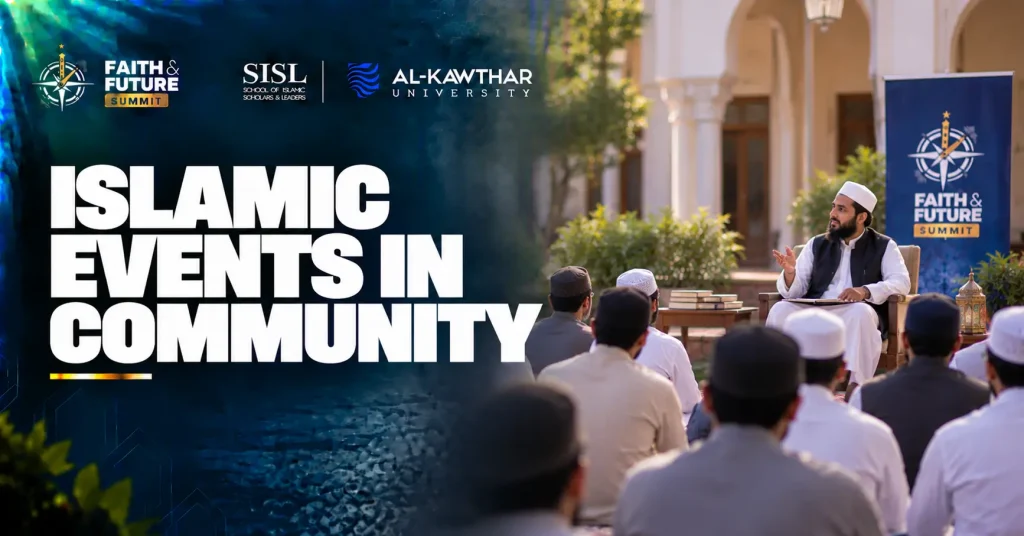
The Faith & Future Summit in Karachi brings together scholars, educators, students, professionals, and community leaders to discuss the relationship between Islamic teachings and contemporary challenges.
Organised by the School of Islamic Scholars & Leaders (SISL) at Al-Kawthar University, the Summit explores subjects including ethical leadership, education, technology, and community responsibility.
Its talks, discussions, and opportunities for interaction provide a setting where participants encounter perspectives beyond their usual academic or professional circles.
For a university student, that might mean gaining a better understanding of how faith relates to career decisions. For an educator or working professional, it might involve exchanging experiences with others interested in addressing community challenges.
The Summit also provides ways to become involved through volunteering and institutional collaboration.
If you’re considering attending an Islamic event in Karachi, it’s worth looking at the subjects being discussed and thinking about how they relate to your own interests and responsibilities.
What you do with the knowledge and relationships afterwards will determine the longer-term value of the experience.
How to Make the Most of an Islamic Event
Attending Islamic seminars is an investment of your time. A little preparation and follow-through will help you make that experience more useful.
1. Decide What You Want to Learn
Before attending, look through the event’s topics and identify one or two questions you want answered. Perhaps you’re looking for guidance on strengthening your faith, balancing career responsibilities, or contributing to your community.
Having a clear intention will help you focus on the sessions most relevant to you.
2. Participate in the Discussions
Take notes on ideas you want to remember. Pay attention to practical suggestions and recommended resources. When there’s an opportunity for questions, use it to clarify something you haven’t understood.
You’ll leave with a better understanding of what you’ve learned and where to continue studying.
3. Have Meaningful Conversations
Introduce yourself to other attendees during breaks. Ask about:
- Their interests
- Work
- Experiences
You might meet someone who shares your interest in education, community welfare, or professional development. Focus on genuine conversations rather than collecting contact details without a reason to stay connected.
4. Take One Action Within the Next Two Days
After the event, review your notes and choose one useful step.
You might contact someone you met, join a community initiative, begin studying a recommended subject, or share an idea with your family. Keep the action manageable and specific.
| Before the Event | During the Event | After the Event |
| Identify your questions | Listen and take useful notes | Review what you learned |
| Explore the programme | Participate in discussions | Apply one practical lesson |
| Decide whom you’d like to learn from | Meet fellow attendees | Follow up on meaningful connections |
These simple steps help you carry the benefits of Islamic gatherings into your daily life, making the time you spend attending more worthwhile.
Building Stronger Communities Starts With Participation
Strong communities grow when people make time to learn together, build relationships, and support one another.
Participating in Islamic events in community settings introduces you to people, ideas, and opportunities that might otherwise remain outside your everyday experience. The conversations you have and the knowledge you gain become especially valuable when you put them into practice.
The next time an Islamic gathering interests you, consider attending. Bring your questions, meet someone new, and leave with one idea worth acting on.
If you’re looking for a gathering that brings faith, learning, and meaningful conversations together, explore the upcoming Faith & Future Summit and become part of the discussion.
Frequently Asked Questions
Why attend an Islamic event when lectures are available online?
Online lectures are convenient for learning at your own pace. Attending an event adds opportunities to ask questions, exchange perspectives, and meet scholars and fellow learners in person. These conversations often make the experience more personal and help you stay connected with others.
How do you attend community events if you’re introverted?
Start with what feels comfortable. Attend sessions that interest you, prepare a question beforehand, or introduce yourself to one fellow attendee. Smaller workshops and volunteering roles also provide natural opportunities to interact without the pressure of approaching large groups.
How do Islamic events create lasting community impact?
The greatest benefit comes from what happens afterwards. Attendees who apply what they’ve learned, maintain meaningful connections, and participate in local initiatives help turn shared ideas into action. Organisers also support this process through follow-up activities and opportunities for continued involvement.
Are Islamic seminars suitable for children and families?
Many Muslim community events welcome families, although arrangements vary. Before registering, check the programme’s age recommendations, seating arrangements, children’s activities, and accessibility. If you’re attending with younger children, confirm whether family facilities or childcare are available.