What Does “Beyond Self” Mean in Islam?
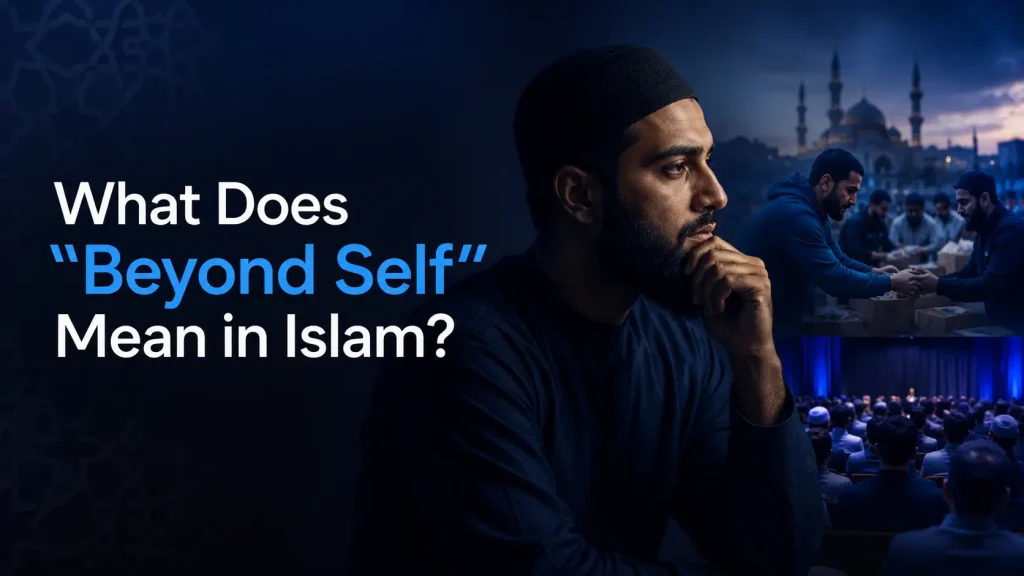
Every day, we fall into the same rhythm. We wake up, go to work, come home, and repeat. Some days we step outside the routine, spending time with friends or family, chasing small moments of happiness, but soon enough the cycle resumes.
As years pass without us noticing, a question finally begins to surface: what did I really do with my life?
We find ourselves confronting a deeper unease:
Could I have done more?
What will I leave behind?
What will remain of me once I’m gone?
Will my life carry meaning, or will it dissolve into the ordinary?
Allah says:
“And I did not create the jinn and mankind except to worship Me.” (Qur’an 51:56)
This verse gives purpose to everything else. Worship in Islam encompasses a life lived in obedience to Allah, where our work, relationships, ambitions, and service to others can all become acts of worship when guided by sincere faith and righteous intention.
The Prophet ﷺ said:
“When a person dies, his deeds come to an end except for three: ongoing charity, beneficial knowledge, or a righteous child who prays for him.” (Sahih Muslim 1631)
Living beyond self means living in a way that seeks Allah’s pleasure through benefiting His creation, fulfilling responsibilities, and leaving behind lasting good.
Beyond Self in Islam: A Broader Way of Living
At its core, “Beyond Self” in Islam begins with not just what you do, but why you do it. The Prophet ﷺ said:
“Actions are judged by intentions, and every person will have what they intended.” (Sahih al-Bukhari)
That single hadith changes everything. A career, a skill, or even a small act of help can either remain personal or become something that carries weight beyond you, depending on the intention behind it.
Living beyond the self is about directing what you already do toward something that benefits others and earns the pleasure of Allah.
Sincerity Comes Before Everything Else
In Islam, what gives an action its value is how sincere it is. Allah says:
“They were not commanded except to worship Allah, being sincere to Him in religion.” (Qur’an 98:5)
Everything begins here, before effort, before recognition, before outcomes.
There is intention first. A person can pursue knowledge, build a career, or contribute to others, but without sincerity, it remains tied to the self.
That’s the starting point of selflessness in Islam. It moves the focus away from being seen and toward being accepted.
Humility Keeps Growth Grounded
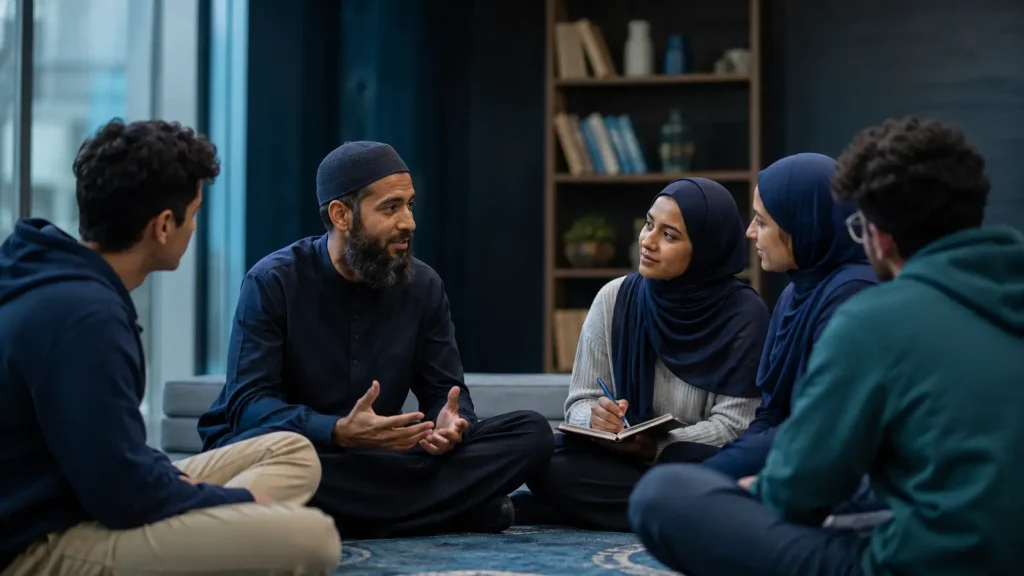
As a person grows, another challenge appears: ego.
Without humility, even good actions can start circling back to the self. Recognition becomes tempting, comparison becomes natural, and the purpose behind actions changes.
Humility reminds a person that growth is about staying grounded while improving. That’s what gives Islamic personal development its depth.
Becoming better matters, and so does becoming better without losing sincerity along the way.
Inner Work Before Outer Results
Islam doesn’t rush you toward outcomes. Instead, it brings you back to what lies beneath those outcomes.
Why this effort?
Why this path?
Who is it really for?
That constant return to intention builds inner discipline, and it shapes everything that follows. When you work on your inner self first, your actions begin to carry clarity and purpose.
That’s how selflessness in Islam moves from being an idea to something lived, through sincerity that is protected by humility, and effort rooted in something deeper than the self.
Responsibility Beyond the Self
In Islam, belief carries over into how you handle responsibility. The Prophet ﷺ said:
“Each of you is a shepherd, and each of you is responsible for his flock.” (Sahih Muslim 1829)
That hadith frames life in a very clear way.
Every role, within family, work, or community, comes with accountability. What a person chooses, how they act, and how they treat others are all part of what they are answerable for. Beyond Self in Islam becomes real at this point. It moves from intention into responsibility.
Responsibility Extends to Family, Community, and the Ummah
A Muslim’s life is connected. Faith carries obligations toward those around you, your family, the people you work with, and the wider Ummah. Your decisions have consequences that reach others.
Recognizing this is the foundation of serving the Ummah. It doesn’t necessarily mean performing great efforts or public roles. It begins with recognising that your position, whatever it is, affects more than just your own life.
Everyday Choices Carry Weight
Many of the most important decisions a person makes don’t look significant on the surface: how you treat people, how you handle trust, what you prioritise when no one is watching.
These things shape environments, influence people, and build patterns that extend beyond the individual.
Islamic personal development connects directly to action right here. Growth is about becoming someone others can rely on, someone whose presence brings benefit.
Serving the Ummah Through Everyday Life
“You are the best nation produced for mankind. You enjoin what is right and forbid what is wrong and believe in Allah.” (Qur’an 3:110)
The idea of serving the Ummah is closely tied to how a person lives day to day. It’s reflected in the way you handle responsibilities, the consistency of your character, and in the intention to be of benefit wherever one is placed.
The Prophet ﷺ said:
“The most beloved people to Allah are those who are most beneficial to others.” (Al-Mu’jam al-Awsat 6192)
That hadith brings the concept into clear focus: Being beneficial is defined by how a person uses what they have, whether that is knowledge, time, skill, or influence.
Beyond the self in Islam becomes visible in everyday life at this point. It reshapes routine rather than sitting apart from it.
Turning Everyday Roles into Meaningful Contributions
Every role a person occupies already carries the potential to benefit others. A student approaches learning not only as personal progress but as preparation to contribute.
- A professional makes decisions with fairness and awareness of their impact.
- A parent raises children with a sense of responsibility that extends into the future
Community service in Islam is embedded in how everyday responsibilities are fulfilled. What changes is the intention and awareness behind it. That kind of awareness also deepens Islamic personal development, because it becomes connected to how that improvement translates into something useful for others.
Consistency Over Visibility
Much of what benefits people is found in reliability, in keeping trust, and in maintaining fairness. These actions shape relationships and environments over time.
They build a form of steady, lasting impact. Selflessness in Islam takes form through that same standard. It is defined by whether an action benefits the people around you.
Personal Success in Islam: Meaning, Limits, and Direction
Islam allows ambition, effort, and growth, but places all of it within a wider purpose. Allah says:
“But seek, through that which Allah has given you, the home of the Hereafter, and do not forget your share of the world.” (Qur’an 28:77)
That verse brings balance into focus. A person can pursue education, build a career, and aim for stability or excellence, all of it directed toward something that continues beyond the immediate result.
When Ambition Carries More Than Personal Gain
Ambition begins to change when it’s connected to intention. The same goal can remain limited to personal progress, or it can benefit others, depending on how you approach it.
A person working toward a profession, for example, is preparing for a role that will affect people, decisions, and outcomes around them. When that awareness is present, ambition stops centring on the self alone.
Selflessness in Islam becomes part of how success is understood at this stage. Personal goals stop being the final point.
Achievement That Ends and Achievement That Continues
Allah says,
“The example of those who spend their wealth in the cause of Allah is that of a grain that sprouts into seven ears, each bearing one hundred grains. And Allah multiplies ˹the reward even more˺ to whoever He wills. For Allah is All-Bountiful, All-Knowing.” (Qur’an 2:261)
Islam consistently directs a person toward what lasts. Effort that benefits others, knowledge that is passed on, and work that improves lives all extend beyond the individual.
They become part of something ongoing. That distinction shapes how you see progress. Reaching a goal stops being the whole point.
What remains meaningful after you reach the goal matters too, and this way of thinking connects directly back to how beyond self in Islam frames life, where outcomes are never separated from their wider effect.
Putting the Beyond Self Vision into Practice

The meaning of beyond self in Islam becomes easier when it is placed in a setting built around responsibility.
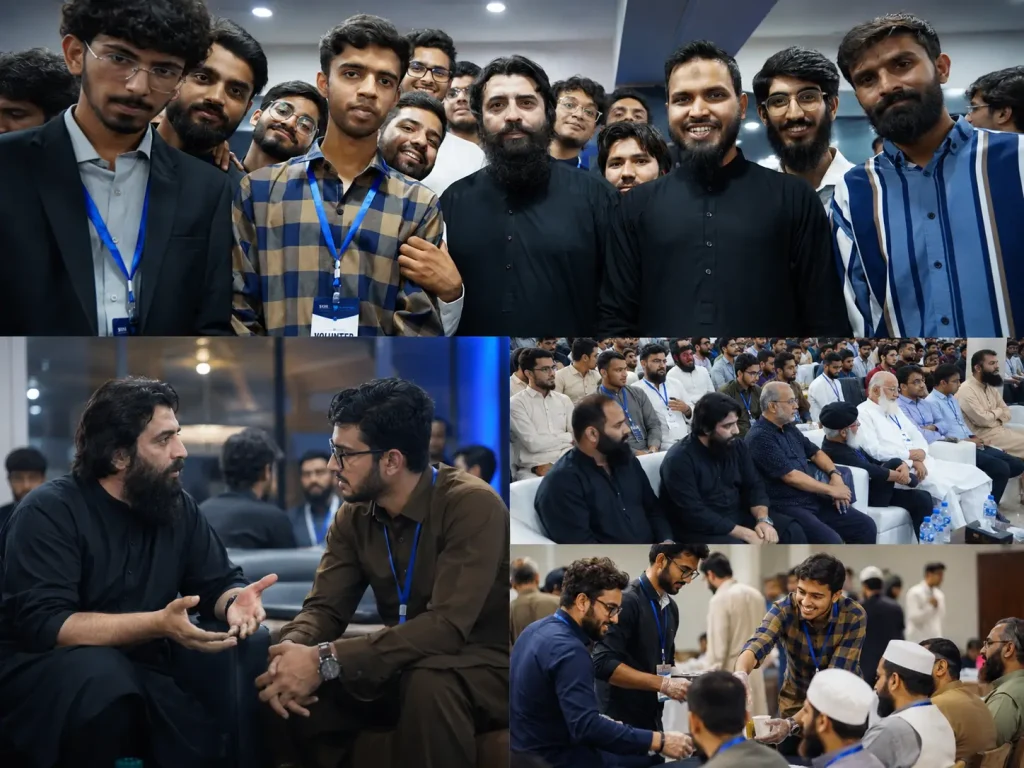
Faith & Future Summit 2026 does this by centring its September edition on the same concerns, like legacy, collective impact, the scholar’s role in the future, and waqf as generational investment.
The summit is framed as a bridge between traditional Islamic scholarship and contemporary challenges, producing leaders who serve the Ummah with knowledge, wisdom, and integrity.
That’s why the concept of Beyond Self: A Vision for the Ummah fits so naturally into the conversation. It carries the same concern that runs through purpose in Islam and serving the Ummah, where growth is understood through what it produces for others.
The summit’s pillars make that connection even clearer, moving from legacy over lifestyle to collective responsibility, the scholar’s role in shaping the future, and waqf as a Sunnah-aligned form of long-term investment.
The event places these values in a setting where you can reflect, test, and carry them into daily life.
What Living Beyond Self Looks Like in Practice
Living beyond self in Islam shows in the moments when intention changes the direction of what you’re doing already.
A person may continue studying, working, or building a career, but the focus begins to change. Your becomes tied to what that effort will enable, who it will benefit, and what it will lead to over time.
The Prophet ﷺ said:
“Allah loves that when one of you does a job, he perfects it.” (Al-Bayhaqi)
Excellence here is about sincerity and responsibility meeting in a way that produces benefit.
Living beyond the self becomes clearer in the decisions a person makes when there is something at stake:
- Choosing fairness when it’s easier not to
- Holding trust even when it’s inconvenient
- Thinking through how a decision will affect others before acting on it
These steps are where selflessness in Islam takes a visible form. Responsibility becomes a part of what gives actions their meaning.
Using What You Have for More Than Yourself
Every person is given something they can work with: knowledge, skill, time, or influence. What changes is how they decide to make use of it.
A skill can remain a personal asset, or it can become a way to support others. Knowledge can stay limited to individual growth, or it can be shared in a way that benefits people beyond you.
Serving the Ummah becomes part of daily life through that same principle. It is defined by whether what you have is allowed to extend beyond your own use. Islamic personal development is about directing that capacity so that it produces something meaningful for others.
Building With the Long Term in Mind
Some actions are complete the moment they are done, whereas there are some that continue to carry impact.
Living with awareness of that difference changes how a person approaches effort. It brings attention to what lasts, what grows over time, and what continues to benefit even when the person is no longer present.
Purpose in Islam starts feeling more concrete right here. It shows in what a person chooses to build, contribute, and leave behind.
A Way of Living That Stays With You
At this point, the idea of “Beyond Self” in Islam becomes something to recognise. It’s present in the way intention shapes action, in how responsibility is carried, and in how a person thinks about the effect of what they do.
It requires a different awareness within the life a person is already living. And that leaves a question that doesn’t go away easily.
When the routines continue and the years move forward, what is being built through them, and who does it reach beyond you?
The Deeper Question

There is a point where all of this becomes less about definitions and more about direction. A person can move through life achieving, building, and progressing, yet still feel uncertain about where it is all leading.
Islam doesn’t remove ambition or effort, but it keeps returning the focus to something deeper. It asks not only what you are doing, but what your life is gradually becoming.
Allah says:
“And that there is not for man except that [good] for which he strives.” (Qur’an 53:39)
What a person strives for, consistently and over time, begins to define them. It shapes what remains when the visible parts of life fall away.
Beyond Self in Islam settles as a question here:
Is what you are working toward contained within your own life, or does it reach further? Does it end with you, or does it continue in ways that benefit others?
These aren’t questions that demand immediate answers. They’re the kind that stay with a person, showing in choices, in priorities, and in how life is shaped over time.
And in that reflection, the idea of selflessness in Islam and serving the Ummah takes on a more personal meaning, as something already being built, day by day, through what you choose to pursue and what you choose to leave behind.
FAQs
What does “Beyond Self” mean in Islam?
Beyond Self in Islam means living with a purpose that extends beyond personal achievement. It involves using the abilities, knowledge, and opportunities Allah gives a person to benefit others, fulfil responsibilities, and seek Allah’s pleasure.
How does Islam define purpose in life?
Islam teaches that the ultimate purpose of life is to worship Allah. This worship extends beyond rituals and includes how a person works, treats others, fulfils responsibilities, and contributes positively to society.
Why is intention important in Islam?
Intention gives actions their meaning and value. The same action can have different outcomes depending on whether it is done for personal recognition or sincerely for Allah’s sake.
How does selflessness relate to Islam?
Selflessness in Islam means moving beyond personal benefit and considering how one’s actions affect others. It involves sincerity, humility, responsibility, and using what Allah has given a person to create benefit.
What does serving the Ummah mean in Islam?
Serving the Ummah means contributing to the well-being of the Muslim community and wider society through knowledge, skills, kindness, responsibility, and fulfilling the roles Allah has placed a person in.
Does Islam discourage ambition and personal success?
No. Islam encourages people to seek knowledge, work hard, build skills, and pursue lawful success. The difference is that success should be guided by purpose and used in ways that benefit others.
How can personal growth become an act of worship in Islam?
Personal growth can become an act of worship when it is pursued with sincere intention and directed toward fulfilling responsibilities, helping others, and becoming a person who brings benefit.
What is the connection between knowledge and serving others in Islam?
Knowledge in Islam carries responsibility. Learning is not only for personal advancement but also for guiding others, solving problems, and contributing to the strength of the community.
What is the importance of leaving a lasting legacy in Islam?
Islam encourages believers to think about the good that continues after their lifetime. Ongoing charity, beneficial knowledge, and righteous children are examples of forms of benefit that can continue beyond a person’s life.
How does Faith & Future Summit 2026 connect to the idea of Beyond Self?
Faith & Future Summit 2026 explores how individual growth can become collective impact through knowledge, leadership, scholarship, legacy, and long-term investment in the Ummah. Its focus on Beyond Self: A Vision for the Ummah reflects the idea that personal development should serve a wider purpose.