Why Attend Faith & Future Summit 2026 in Karachi?
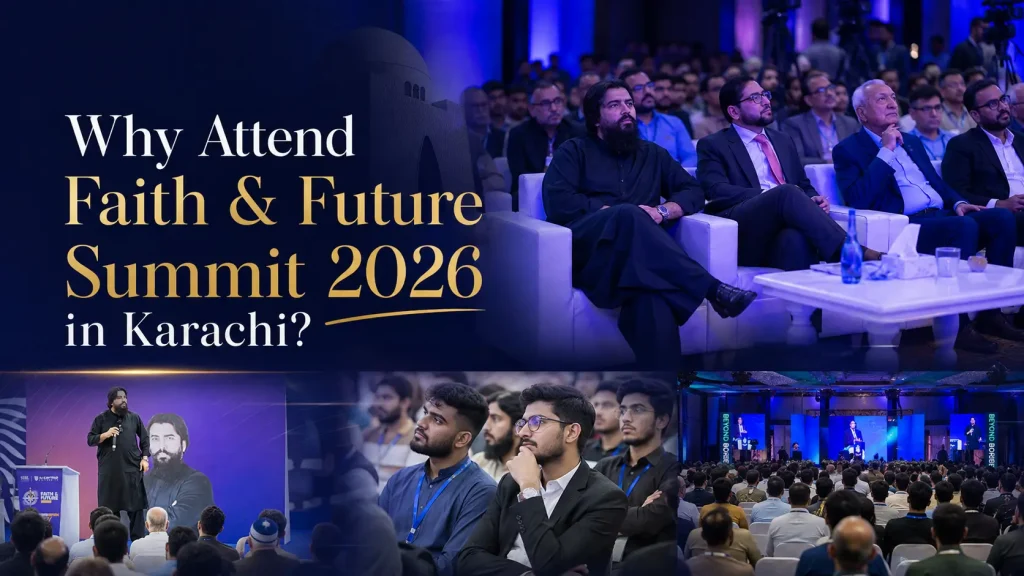
Most of us don’t struggle to define what a meaningful life looks like.
We struggle to live like we believe it. We say it matters to be useful, to contribute, to leave people better than we found them. But when you look closely at how our time, energy, and attention are spent, the alignment isn’t always there.
That gap, between what we believe and what we build our lives around, is one of the hardest to close. The Prophet ﷺ named that gap with clarity:
“The most beloved people to Allah are those who are most beneficial to others.” – Source
It’s a simple hadith, but living it consistently requires intention, perspective, reminders, and the right environment.
That’s what makes events like Faith & Future Summit 2026 different. For a day, you’re placed among people who are actively working through that same question: how to turn belief into something visible and useful.
Through scholars, conversations, and shared experience shaped by years of teaching, counseling, and building for the next generation, the gap starts to feel a little more possible to close.
What Faith & Future Summit 2026 Offers Beyond a Typical Event
Closing that gap requires a conversation built around a single question, explored from multiple angles: personal legacy, collective responsibility, and an education that carries both forward.
That’s the intention behind Faith & Future Summit 2026.
A Shared Theme That Connects Every Session
Every session returns to the same central idea: Beyond Self: A Vision for the Ummah. The whole summit is designed to lead out as one, continuous conversation.
Sheikh Hussain Yee brings his experience in da’wah and family counseling into the question of legacy: What we leave behind in the lives we touch.
Sheikh Kashif Naseem Dilkusha approaches collective responsibility through his teaching of the Qur’an and Sunnah, grounding the discussion in what we owe beyond ourselves.
You’re not just listening to different speakers – you’re watching a single question unfold through perspectives shaped by decades of practice.
Why the Scholars and Speakers Matter
A theme like Beyond Self only works if the people leading it have spent time living the questions it raises. What makes this summit worth sitting through is knowing where each speaker is coming from, and the kind of work that shaped their perspective.
Sheikh Hussain Yee
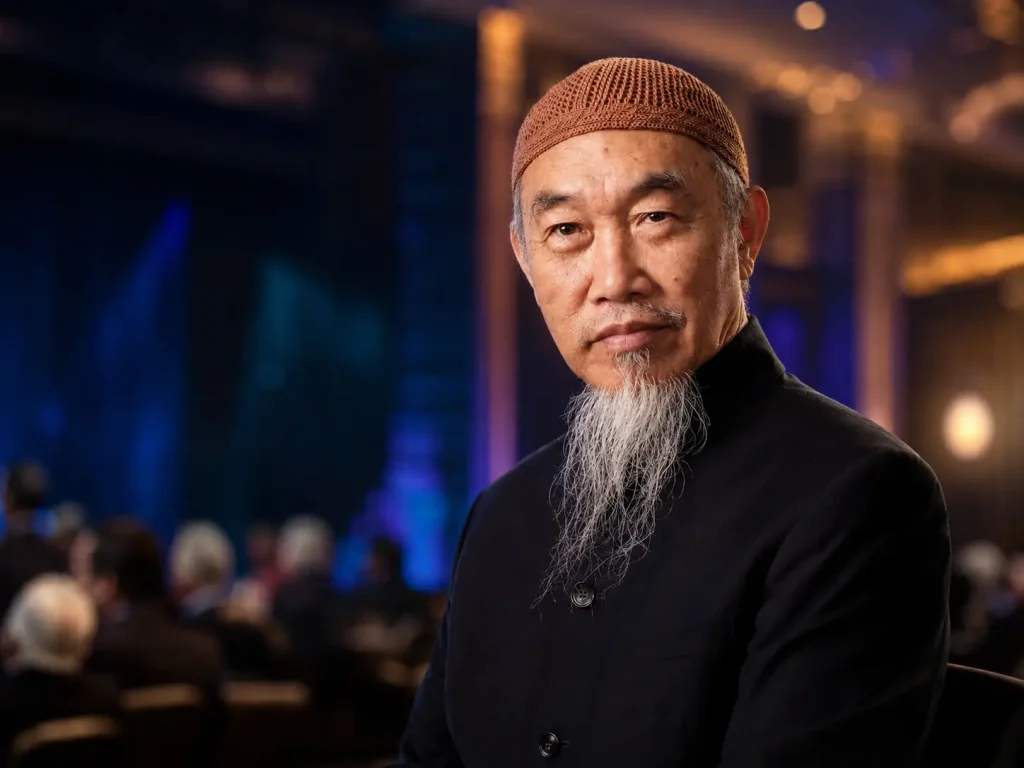
Sheikh Hussain Yee spent over four decades in da’wah and family counseling, after studying at the Islamic University of Madinah under Sheikh Al-Albani.
That kind of work means the question of legacy comes from years of sitting with families trying to hold on to what matters, and seeing what slips when nothing is carried forward deliberately.
Sheikh Kashif Naseem Dilkusha
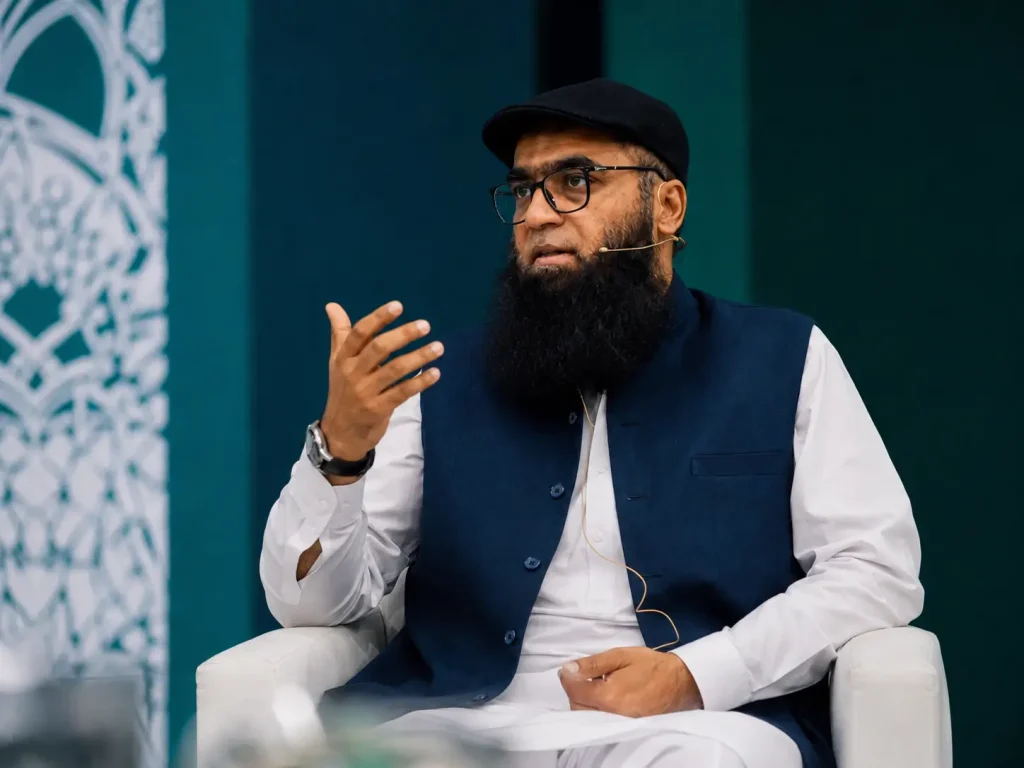
Sheikh Kashif Naseem Dilkusha’s work has been rooted in teaching Qur’an, Sunnah, and character development through Azaan Institute Pakistan. Teaching thousands of students over time changes how you understand responsibility.
It becomes less about ideas, and more about what actually stays with people.
Why the Summit Matters for Muslim Youth
The question of what you’re building toward becomes harder to ignore when your direction is still unfolding.
At that stage, the decisions in front of you are not fixed yet. They are still shaping what your life will center around, often in ways that only become clear later. That is where the theme Beyond Self begins to feel less like an idea and more like something you have to work through for yourself.
Perspective for the Decisions You’re Making Right Now
If you’re choosing a major, deciding whether to take a job offer, or figuring out what to do with a skill you’ve spent years building, those choices usually get evaluated by one measure: what’s best for you. Sheikh Kashif Naseem Dilkusha’s session on collective responsibility, both work through a second measure alongside it: who else the decision touches.
Faith Built Into Ambition and Career Choices
Career advice and spiritual advice often stay in separate conversations. Sheikh Hussain Yee’s session on legacy pulls them into one conversation: what you’re ambitious for, and who benefits once you get there.
None of this is limited to people early in their career, though it often lands hardest there, while the biggest decisions are still ahead.
Why It Matters for Families, Educators, and Professionals
Navigating what to study, what to pursue, and what to build your life around isn’t always straightforward. For many young people in Pakistan, that phase can feel uncertain, with decisions that carry more weight than they first appear.
If that’s where you are, Faith & Future Summit 2026 gives you a space to step back and think through those choices with more clarity.
For others, those same questions show up differently. As a parent, educator, or community leader, you’re helping guide decisions that shape someone else’s direction. This Islamic conference in Karachi brings that responsibility into the same conversation, so both perspectives are part of the same room.
Guiding Others Through the Same Questions
Parents raising children, teachers running classrooms, and community leaders running organizations all deal with a version of the same problem:
Someone younger is watching how they define success and letting it shape their own.
Professional Choices That Reach Past You
A manager deciding how to treat a team. A doctor deciding how to treat a patient. A business owner deciding what the business is built around.
Different roles, but the same underlying question.
What does responsibility actually look like once it moves from intention into action?
That’s where Sheikh Kashif Naseem Dilkusha’s session on collective responsibility comes in. It draws directly from years of teaching Qur’an, Sunnah, and character development, and brings that lens into the kinds of decisions people are already making every day.
What You Gain From Attending
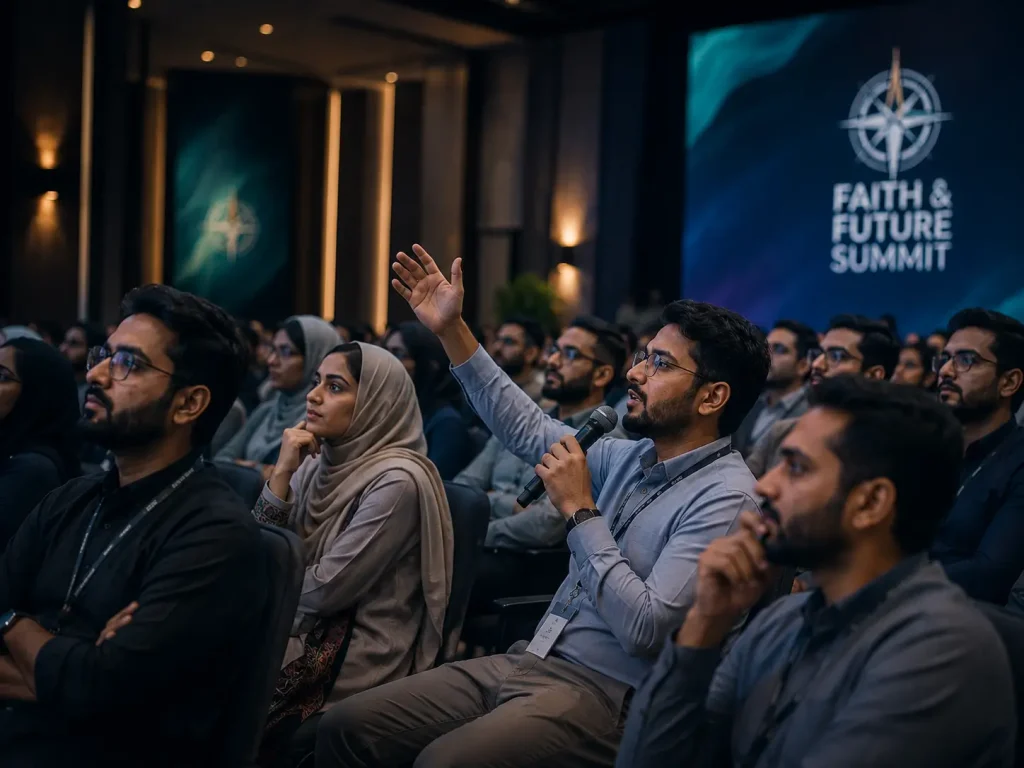
Family responsibility, professional demands, education, career decisions, the sessions move through all of it because that’s what people are already carrying with them.
Somewhere along the way, it stops feeling like separate concerns.
You start to see how the same question sits underneath each one, showing up in different forms depending on where you are and what you’re responsible for.
By the end, it’s not so much about how much was covered, but how clearly those connections begin to show themselves.
Here’s what you gain from attending the Faith & Future summit in Karachi:
Clearer Thinking About Faith and Responsibility
Each session gives you a specific way to think through the connection between what you believe and what you do with it.
A Stronger Sense of Purpose
Purpose gets harder to hold onto once daily obligations pile up. Spending time with people actively working through what their own purpose looks like sharpens yours too.
Guidance You Can Use in Daily Life
The sessions cover legacy, collective responsibility, and education, angles that translate into specific choices: what you teach your children, how you spend your time, what you build your career around. None of it stays abstract.
People Working Through the Same Questions You Are
The people sitting near you chose to spend their time on the same theme you did. Conversations during the networking session pick up directly from what was just covered.
Put together, that’s what a faith-based event in Karachi built around one theme adds up to.
Why Attending Live Matters
All of that depends on being there in person, not on catching a recording or a summary afterward.
What a Recording Leaves Out
A recording carries the information. It leaves out the follow-up question you’d ask in the moment, the adjustment a speaker makes based on how people respond, and the person next to you who says something that reframes what you just heard.
Questions You Get to Ask Yourself
The open Q&A means you’re not limited to whatever someone else thought to ask during the session. Whatever is unresolved for you personally gets a chance to be addressed directly, by the person who spent years working through it.
None of that requires anything complicated on your end, just showing up and registering for a seat.
Quick Event Details
- Event: Faith & Future Summit 2026, “Beyond Self: A Vision for the Ummah”
- Date: Sunday, 20 September 2026
- Time: 9:00 AM to 1:00 PM PKT
- Venue: Al-Kawthar University Auditorium, Karachi
- Organized by: School of Islamic Scholars & Leaders (SISL) and Al-Kawthar University
- Tickets: Rs. 500 for students, Rs. 1,000 general, both covering full access to the sessions, the Q&A, refreshments, and the networking session
A Reason to Act
Faith & Future Summit 2026 was built around a question most people spend years avoiding: whether what you’re building your life toward serves anyone beyond you.
Sheikh Hussain Yee and Sheikh Kashif Naseem Dilkusha each spent years working through their own version of that answer, in families, in classrooms, in communities, and Faith & Future Summit 2026 in Karachi is where that work gets shared directly with you.
Showing up is the easy part. What you do with the question afterward is the part that matters.
Frequently Asked Questions
A few questions come up often from people who’ve heard about the summit but want more specifics before registering.
Has Faith & Future Summit happened before, or is this the first one?
Faith & Future Summit is now in its third edition. Past gatherings have featured scholars including Prof. Mehmet Bulut, Dr. Amjad Saqib, and Br. Edris Khamissa, and reached more than 150,000 viewers online across previous editions.
Is this the same event as Beyond Borders?
No. Beyond Borders was the previous edition, built around a broader set of themes across technology, education, and community.
Is Faith & Future Summit connected to Al-Kawthar University?
Yes. The summit is organized jointly by the School of Islamic Scholars & Leaders (SISL) and Al-Kawthar University, which also hosts the event at its auditorium in Karachi.
What will the scholars cover in their sessions?
Sheikh Hussain Yee’s session covers legacy, Sheikh Kashif Naseem Dilkusha’s covers collective responsibility, all tied to the same theme, Beyond Self: A Vision for the Ummah.
Do I need to attend all two sessions, or can I come for just one speaker?
Tickets cover the full event, but nothing stops you from prioritizing the sessions that speak to you most directly.