Deen and Dunya Balance in Islam: Uniting Career and Faith

Deen and dunya balance in Islam refers to maintaining harmony between spiritual obligations and worldly responsibilities. Islam encourages Muslims to pursue education, careers, family responsibilities, and personal development while keeping their relationship with Allah at the centre of their lives. A balanced Islamic lifestyle includes:
- Fulfilling acts of worship and spiritual duties
- Pursuing lawful work and personal growth
- Serving family and society responsibly
- Preparing for both worldly wellbeing and the Hereafter
Every generation faces the challenge with balancing what demands their attention in this world with what gives their life deeper meaning. Careers, education, financial responsibilities, and personal goals require time and effort, while faith requires consistent commitment and reflection.
The concept of deen and dunya balance in Islam provides a framework for bringing these areas of life together. Islam presents worldly responsibilities and spiritual devotion as connected parts of a meaningful life.
Understanding what is the purpose of life according to Islam shows how everyday choices can become part of a larger journey toward Allah. Allah provides guidance on this balance in the Quran:
“And seek, through that which Allah has given you, the home of the Hereafter; and do not forget your share of the world…” – (Surah Al-Qasas 28:77)
In this guide, we’ll explore how Islam approaches career and faith, why worldly responsibilities hold spiritual value, and how Muslims can develop an Islamic lifestyle that connects daily actions with lasting purpose.
Understanding Dunya: The Place of Worldly Life in Islam
Building a healthy deen and dunya balance begins with recognising how Islam views worldly life. The term Dunya refers to the present world where you:
- Work
- Build relationships
- Fulfil responsibilities
- Make choices carrying meaning beyond this life.
It’s a temporary stage of existence that prepares you for the Hereafter. Some people view spiritual commitment as requiring distance from worldly responsibilities, while others become so focused on worldly goals that they lose sight of their deeper purpose.
Islamic teachings present a balanced approach:
The world is a place where you fulfil responsibilities, develop your abilities, and seek benefit while remaining conscious of your relationship with Allah.
At the same time, Islam reminds believers that worldly life, despite its opportunities and blessings, remains temporary. Allah says:
“Every soul will taste death. And you will only receive your full reward on the Day of Judgment. Whoever is spared from the Fire and admitted into Paradise will indeed triumph. The life of this world is no more than the enjoyment of delusion.” – (Surah Aal-e-Imran 3:185)
This verse places dunya in its proper perspective. The world is a place of responsibility, growth, and meaningful action, yet it is not the final destination.
A balanced approach means engaging with worldly responsibilities while keeping the Hereafter as the ultimate focus. The value of worldly pursuits depends on the intention behind them and the way they are carried out.
| Relationship With Dunya | Examples |
| A Means of Good (Mahmud) | Lawful work, supporting family, charity, beneficial knowledge |
| Permissible Enjoyment (Mubah) | Rest, recreation, and lawful comforts in moderation |
| A Source of Harm (Madhmoom) | Pride, greed, dishonesty, and neglecting obligations |
A healthy relationship with the world includes:
- Lawful Provision:
Earning an income, supporting dependents, and developing financial stability through ethical means.
- Responsible Enjoyment:
Appreciating lawful comforts while maintaining balance and gratitude.
- Moral Awareness:
Avoiding actions driven by arrogance, greed, or disregard for the rights of others.
The Prophets themselves demonstrated engagement with worldly responsibilities. Prophet Dawud (peace be upon him) earned from his own work as a craftsman (Sahih al-Bukhari 2072), showing that productive effort and spiritual devotion can exist together.
The Spiritual Dimension of Work and Responsibility
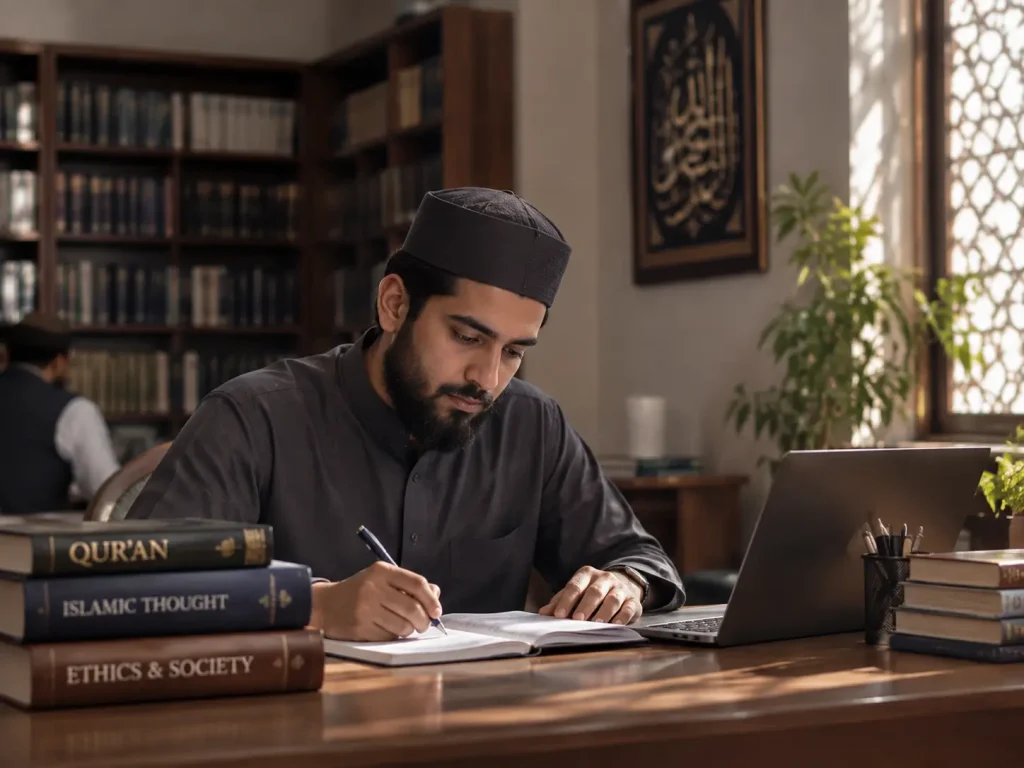
A balanced Islamic lifestyle recognises that your professional responsibilities can carry spiritual meaning. Your career, skills, and daily efforts become connected to faith when they are guided by sincere intention and ethical principles.
When an architect creates safe spaces, an engineer develops useful systems, an accountant maintains honesty, or an educator shares knowledge, their work can become a form of service when it benefits others and fulfils their responsibilities.
This connection between career and faith depends on how you approach your work:
- Honouring Commitments:
Fulfilling responsibilities, respecting agreements, and maintaining honesty in professional duties.
- Seeking Lawful Earnings:
Choosing income sources that align with Islamic principles and avoiding practices built on exploitation or dishonesty.
- Practising Good Character:
Treating colleagues, clients, and communities with fairness, patience, and respect.
Viewing your career through these principles allows professional growth to remain connected with spiritual purpose. For further reflection on ambition and achievement, explore the Islamic view of success beyond wealth and status.
The Prophetic Model: Giving Every Responsibility Its Right
The Prophetic example demonstrates that spiritual excellence includes recognising the rights of every part of life. Islam encourages devotion to Allah while also maintaining responsibilities toward your body, family, and community.
A well-known narration in Sahih al-Bukhari describes three companions who wanted to increase their worship by adopting extreme practices:
- One decided to pray throughout the night without sleeping.
- One chose to fast continuously without breaking his fast.
- One decided to avoid marriage completely.
The Prophet Muhammad (PBUH) guided them toward a more balanced approach:
“As for me, by Allah, I fear Allah more than you and am more conscious of Him than you; yet I fast and break my fast, I pray and I sleep, and I marry women. Whoever turns away from my Sunnah is not of me.” – (Sahih al-Bukhari 5063)
This teaching highlights that devotion is not measured by neglecting other responsibilities. The companion Salman al-Farsi expressed this principle clearly:
“Your Lord has a right over you, your body has a right over you, and your family has a right over you; so give each one possessing a right their due right.” – (Sahih al-Bukhari 6139 )
A balanced life recognises that worship, personal wellbeing, family commitments, and professional responsibilities all have their proper place.
Exploring how faith discipline and purpose help young Muslims connect with one another offers practical ways to maintain this harmony in daily life.
Building Daily Habits for Deen and Dunya Balance
A sustainable deen and dunya balance requires intentional routines that protect both your spiritual commitments and worldly responsibilities. When academic demands, professional tasks, and personal obligations increase, structured habits help you maintain consistency in every area of life.
| Daily Anchor | Practical Application |
| Prayer as a Foundation | Organise your schedule around Salah rather than treating worship as something to fit into remaining time |
| Healthy Digital Boundaries | Create periods for family connection, reflection, and rest away from constant notifications |
| Regular Charity | Maintain generosity through consistent acts of Sadaqah |
| Physical Wellbeing | Protect your health and energy through proper rest and care |
Three practical habits can help maintain this balance:
- Organise Your Day Around Salah:
Treat the five daily prayers as fixed points that shape your schedule. Planning work, study, and meetings around prayer times creates moments of reflection and helps maintain spiritual awareness throughout a busy day.
- Protect Time for Family and Reflection:
Professional responsibilities can easily extend beyond working hours. Creating intentional boundaries for family conversations, Quran recitation, and personal rest preserves important relationships and protects your overall well-being.
- Maintain Regular Charity:
Consistent giving keeps wealth connected to gratitude and service. Regular Sadaqah reminds you that your resources carry responsibilities beyond personal comfort.
Aligning your routine with these practices strengthens your purpose in Islam. When your daily schedule reflects your values, work and worship become connected parts of a meaningful life.
Using Your Skills for the Benefit of Others

A balanced Islamic lifestyle extends beyond personal growth. The knowledge, skills, and opportunities you develop gain greater significance when they contribute to the well-being of others. The Prophet Muhammad (peace be upon him) highlighted this principle:
“The most beloved of people to Allah are those who are most beneficial to others.” – (Reported by al-Tabarani)
Professional expertise can become a means of service in many ways:
- Reducing Hardship:
Healthcare professionals, engineers, educators, and technology specialists can use their skills to address real community needs.
- Strengthening Institutions:
Ethical businesses, charitable organisations, and community initiatives create systems that continue benefiting people over time.
- Leading Future Generations:
Mentoring students and younger professionals allows knowledge and experience to continue beyond personal achievement.
Understanding the role of Muslim youth in the Ummah highlights how professional development can contribute to collective progress. When individual abilities are connected with service, career paths become opportunities for meaningful impact.
Finding Community on the Journey of Faith and Purpose
Maintaining harmony between professional goals and spiritual values becomes easier when you learn alongside people who share similar commitments. Communities built around knowledge, mentorship, and discussion provide opportunities to reflect on how faith shapes everyday decisions.
The Faith & Future Summit 2026 explores this connection through its theme, “Beyond Self: A Vision for the Ummah.” Jointly organised by the School of Islamic Scholars & Leaders (SISL) and Al-Kawthar University, the summit brings together scholars, professionals, educators, and students to discuss how personal ambitions can contribute to wider community benefit.
The keynote sessions include:
Explores how individuals can think beyond mere immediate achievements and consider the lasting impact of their careers, resources, and choices.
Discusses how personal skills and ambitions can be directed toward cooperation, responsibility, and community development.
The summit provides an opportunity to contemplate your own priorities, learn from experienced voices, and consider how your career path connects with your deeper purpose.
Living With Purpose Through Deen and Dunya Balance
A meaningful deen and dunya balance comes from understanding that every part of life has a place and purpose. Your work, education, relationships, and personal goals can all become connected to faith when they are guided by sincere intention and responsibility.
When your career becomes a means of service, your wealth becomes a means of benefit, and your daily choices remain connected to Allah, worldly responsibilities gain deeper meaning. This integrated approach allows you to pursue excellence in this life while preparing for lasting success in the Hereafter.
Frequently Asked Questions
Does working long hours mean I am neglecting my Deen?
A demanding career does not automatically conflict with faith. Professional responsibilities can remain spiritually meaningful when your income is lawful, your obligations are fulfilled, and your work is carried out with honesty. Challenges arise when work begins affecting essential duties, relationships, or ethical commitments.
Can a Muslim pursue significant wealth?
Islam recognises lawful wealth as a responsibility that can create benefit. Financial success can support families, strengthen communities, and fund charitable efforts when guided by gratitude and ethical conduct.
How can professionals maintain prayer during busy schedules?
Planning ahead makes consistency easier. Identifying suitable prayer spaces, communicating respectfully with employers, and organising your day around Salah helps preserve worship alongside professional responsibilities.
What is the Islamic view of leisure and personal hobbies?
Lawful recreation can support a balanced life. Rest, exercise, and time with family help maintain physical and emotional wellbeing, allowing you to fulfil your responsibilities with greater focus.
Does focusing on the Hereafter require neglecting health and rest?
Taking care of your body is part of fulfilling your responsibilities. Health is an Amanah from Allah, and maintaining wellbeing supports your ability to worship, work, and serve others.
What can someone do when career ambition begins affecting spiritual focus?
Begin by reviewing your daily priorities. Strengthen consistency in Salah, create healthier boundaries around work, dedicate regular time to Quran, and maintain acts of service and charity that reconnect you with your purpose.
How do family responsibilities fit into deen and dunya balance?
Family responsibilities are part of religious life. Supporting parents, caring for spouses, and nurturing children are acts of devotion that carry spiritual value alongside professional and personal commitments.