The Islamic Concept of Responsibility Beyond the Self
Islamic responsibility teaches that your abilities, resources, and choices are trusts from Allah that carry a wider purpose beyond personal success.
- Responsibility Begins With Allah: Understand how faith creates accountability through worship, obedience, and fulfilling the trusts placed upon you.
- Responsibility Extends Beyond Yourself: Learn how Islam connects personal growth with duties towards family, society, and the wider Ummah.
- Service Is Part of Faith: Explore how serving others in Islam transforms knowledge, skills, and resources into meaningful contributions.
- Success Includes Positive Impact: Discover how accountability in Islam encourages believers to use their abilities with justice, compassion, and responsibility.
You work hard to complete your studies, build your career, support your family, and fulfil your personal commitments. But Islam teaches that the value of your efforts extends beyond your own goals and achievements.
The concept of Islamic responsibility reminds believers that their time, abilities, and resources are trusts (Amanah) from Allah. These trusts come with responsibilities towards the Creator, family, society, and the wider Ummah.
Understanding purpose in Islam helps you see how everyday actions can carry deeper meaning. Your education, profession, and personal strengths can become opportunities to contribute, support others, and create lasting benefit.
Exploring how responsibility begins with Allah, extends to those around us, and shapes our role in society helps us understand what it means to live with purpose beyond ourselves.
Accountability in Islam: Understanding Amanah and Mas’uliyyah
Modern culture often encourages people to measure success through personal achievement, financial growth, and individual progress. While Islam encourages excellence and hard work, it also teaches that our abilities, opportunities, and resources carry responsibilities beyond ourselves.
The concept of Islamic responsibility (Mas’uliyyah) begins with understanding Amanah, the trust that Allah places upon every believer. Your knowledge, skills, wealth, time, and influence are not only personal advantages; they are also means through which you can create benefit.
The Quran describes the weight of this trust:
“Indeed, We offered the Trust to the heavens and the earth and the mountains, and they declined to bear it and feared it; but man undertook to bear it…” – (Surah Al-Ahzab 33:72)
This trust creates accountability in Islam. A believer is responsible not only for personal actions but also for how they use the blessings and abilities Allah has given them. The Prophet Muhammad (PBUH) said:
“Every one of you is a shepherd, and every one of you will be questioned about his flock…” – (Sahih Muslim 1829)
This responsibility applies to every person, whether you lead an organisation, support a family, contribute to a community, or manage your own daily choices. Exploring what does beyond self mean in Islam helps explain how individual actions become connected to a wider purpose.
The Four Areas of Responsibility in Islam
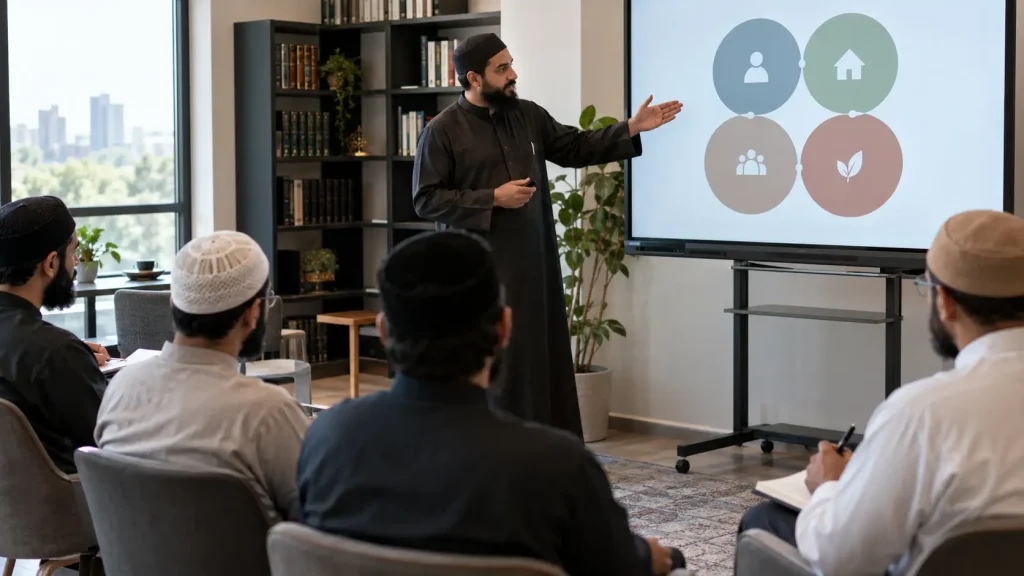
Islamic responsibility does not mean carrying every problem in the world alone. It begins with fulfilling your immediate duties and gradually extends towards wider service.
| Area of Responsibility | Focus | Examples in Daily Life |
| Responsibility Toward Allah | Strengthening your relationship with your Creator | Prayer, sincerity, fulfilling obligations, and maintaining moral boundaries |
| Responsibility Toward Family | Caring for those closest to you | Respecting parents, supporting family members, and nurturing children |
| Responsibility Toward Society | Creating benefit around you | Helping neighbours, acting honestly, and reducing harm |
| Responsibility Toward the Ummah | Contributing towards collective wellbeing | Sharing knowledge, skills, resources, and efforts for wider benefit |
1. Responsibility Toward Allah
Every form of service begins with a strong relationship with Allah. Worship, sincerity (Ikhlas), and moral discipline provide the foundation that allows believers to contribute without seeking recognition or personal gain.
2. Responsibility Toward Family
Family is the first place where responsibility is practiced. Supporting parents, caring for relatives, and building a healthy home environment are among the most important ways believers fulfil their duties.
3. Responsibility Toward Society
Faith is reflected through how we interact with people around us. Honesty in business, helping neighbours, fulfilling promises, and contributing positively to society are practical expressions of belief.
4. Responsibility Toward the Ummah
Islam connects believers through a shared sense of care and concern. The Prophet Muhammad (PBUH) described this connection:
“The parable of the believers in their affection, mercy, and compassion for one another is that of a single body. When any limb aches, the whole body reacts with sleeplessness and fever.” – (Sahih al-Bukhari 6011)
Having responsibility toward Ummah means recognising that your skills, knowledge, and resources can contribute to solving challenges beyond your immediate surroundings. This can include education, healthcare, technology, entrepreneurship, and community development.
Serving Others in Islam: Turning Faith Into Action
Service in Islam is not limited to occasional charity. While giving wealth is valuable, believers are also encouraged to contribute through their time, knowledge, skills, and efforts. Serving others in Islam means finding ways to use what Allah has given you for the benefit of others.
Examples include:
- Technology Professionals:
Developing useful tools, improving access to information, and supporting organisations through technical skills.
- Healthcare Professionals:
Improving health awareness, supporting vulnerable communities, and sharing medical expertise.
- Business and Professional Leaders:
Strengthening community initiatives through planning, management, and responsible decision-making.
When people contribute through their own abilities, individual strengths become a source of collective benefit.
Exploring community service in Islam highlights how service is not separate from faith, but one of the ways faith is expressed in daily life.
From Individual Duty to Collective Responsibility
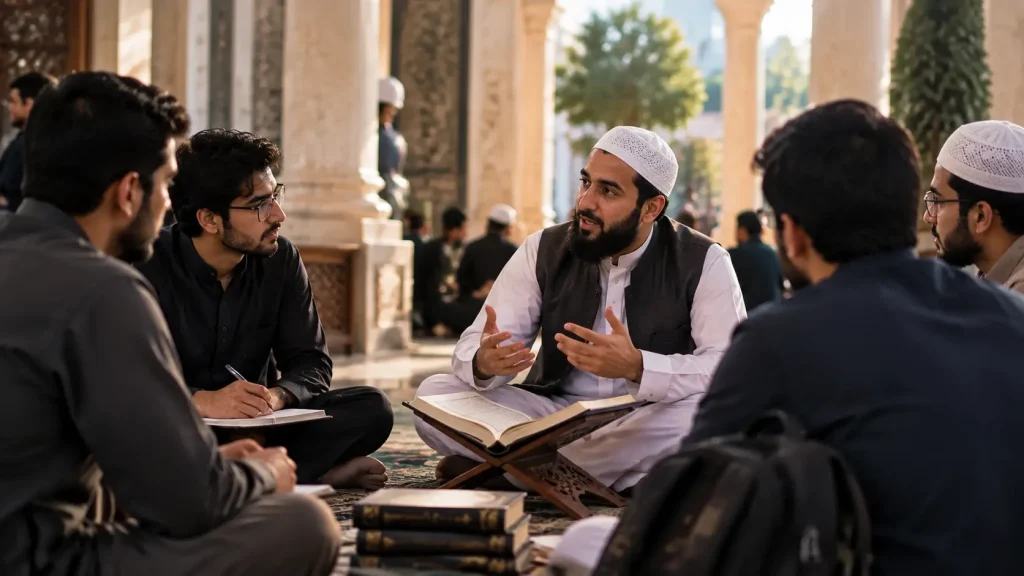
Islam recognises that some responsibilities are personal, while others require collective effort. Scholars describe this distinction through two categories: Fard ‘Ayn (individual obligations) and Fard Kifayah (communal obligations).
Individual duties such as prayer, fasting, and maintaining personal integrity are responsibilities every Muslim must fulfil. Communal responsibilities, however, involve areas that benefit society as a whole, such as:
- Education
- Healthcare
- Leadership
- Supporting those in need.
A strong Muslim community requires people with different skills and expertise to contribute. Scholars, doctors, educators, entrepreneurs, engineers, and professionals all play a role in strengthening society through their knowledge and abilities.
This is where responsibility toward Ummah extends beyond individual acts of kindness. It involves thinking about how your skills, resources, and opportunities can contribute to solutions that benefit others.
Historically, Muslim communities developed lasting institutions through Awqaf (endowments), supporting schools, hospitals, libraries, and public services. These examples show how long-term planning and collective effort can create benefits that continue for generations.
Today, fulfilling these responsibilities can take many forms. Your education, professional experience, and skills can become valuable contributions towards building stronger communities.
Turning the Idea of “Beyond Self” Into Action
Understanding responsibility is the first step; applying it requires reflection, guidance, and opportunities to act.
Faith & Future Summit 2026 provides a space where students, educators, and professionals can explore how personal growth connects with wider responsibility. Taking place on Sunday, 20 September 2026, at the Al-Kawthar University Auditorium in Karachi, the summit brings together different generations to discuss faith, leadership, and community contribution.
The theme Beyond Self: A Vision for the Ummah explores how individuals can move from personal achievement towards meaningful contribution.
Sessions include:
- Reflecting on Long-Term Impact:
Sheikh Hussain Yee’s keynote, “What Will Outlive You?”, explores how your choices, skills, and resources can create benefits that continue beyond your own lifetime.
- Moving From Individual Success to Collective Contribution:
Sheikh Kashif Naseem Dilkusha’s session, “From ‘Me’ to ‘We’: Reviving the Ummah’s Collective Spirit”, discusses how people can work together and use their abilities for shared benefit.
- Learning Through Dialogue:
The live Q&A session provides an opportunity to explore questions around faith, responsibility, leadership, and applying Islamic values in everyday life.
Building a Legacy Through Responsibility
Your impact is not only measured by personal achievements, titles, or possessions. It is also reflected in the knowledge you share, the people you support, and the positive contributions you leave behind.
Recognising your life and abilities as a trust changes how you view everyday actions. Your studies, career, and relationships can all become opportunities for meaningful contribution.
Living with Islamic responsibility means looking beyond yourself while remaining committed to the duties Allah has placed in your care.
Frequently Asked Questions About Islamic Responsibility
Does focusing on the Ummah mean I should ignore my own career goals?
No. Islam encourages people to seek beneficial knowledge, develop skills, and earn through lawful means. Personal success can become a way to support your family, serve society, and contribute towards meaningful causes.
How can students practise responsibility without having financial resources?
Responsibility is not limited to wealth. Students can contribute through their time, knowledge, skills, volunteering, helping others, and preparing themselves to serve society through their future careers.
What does accountability in Islam mean in everyday life?
Accountability in Islam means recognising that your choices, abilities, and resources are trusts from Allah. It encourages believers to consider how their actions affect themselves, their families, and the people around them.
How can I balance family responsibilities with serving others?
Islam encourages balance. Caring for your family and fulfilling personal responsibilities are themselves forms of worship. Community service should be approached in a sustainable way that allows you to support others while maintaining your existing duties.