Personal Growth in Islam – Improving Yourself Through Faith
Self-improvement in Islam is the process of developing yourself through faith, discipline, good character, and purposeful action. Islam encourages believers to continuously improve their relationship with Allah, strengthen their habits, refine their character, and contribute positively to society.
Key areas of personal growth include:
- Building sincerity and self-awareness
- Developing patience and discipline
- Improving manners and relationships
- Seeking beneficial knowledge
- Turning intentions into meaningful actions
You can earn a better income, achieve a higher degree, build successful products, and create meaningful professional achievements. Yet after reaching these milestones, a deeper question naturally emerges:
“Is that all there is to life?”
For a Muslim, this question leads to a deeper understanding of success. Islam connects human growth with the development of the soul, the refinement of character, and the responsibility we carry toward Allah and His creation.
The Quran reminds us:
“Whereas the life of this world is no more than the delusion of enjoyment.” – (Surah Ali ‘Imran
Allah further says:
“He has succeeded who purifies it (the soul), and he has failed who corrupts it.” – (Surah Ash-Shams 91:9-10)
These verses establish the foundation of meaningful growth in Islam. Self-improvement in Islam focuses on strengthening faith, developing character, building discipline, and improving the way we interact with ourselves and those around us.
Through Islamic personal development, we explore how faith shapes our goals, habits, relationships, and responsibilities, guiding us toward a life of purpose, sincerity, and positive contribution.
The Foundation of Growth: Tazkiyat an-Nafs (Purification of the Soul)
External achievements shape your life, but the condition of your heart shapes the person you become. In Islamic personal development, true growth begins with Tazkiyat an-Nafs (purification of the soul).
It is the continuous process of:
- Recognizing your weaknesses
- Refining your character
- Developing a stronger connection with Allah.
Allah says:
“O believers! Be mindful of Allah, and let every soul look to what it has sent forth for tomorrow. And fear Allah. Surely Allah is All-Aware of what you do.” – (Surah Al-Hashr 59:18)
This verse places the purification of the soul at the center of true success. Your journey of improvement is not only about what you achieve outwardly, but also about the qualities you develop within yourself.
Classical Islamic scholars describe different states of the human soul reflecting this journey:
- An-Nafs al-Ammarah bi as-Su’ (The Soul Inclined Toward Wrong):
The part of human nature that pulls toward immediate desires and comfort, making discipline and self-control more difficult.
- An-Nafs al-Lawwamah (The Self-Reproaching Soul):
The stage where you recognize your mistakes, reflect on your choices, and strive to improve.
- An-Nafs al-Mutma’innah (The Reassured Soul):
A state of inner peace and stability built through faith, trust in Allah, and consistent effort.
This process begins with Muhasabah (self-accountability).
Taking time to reflect on your choices, habits, conversations, and intentions allows you to identify what needs improvement and continue moving toward your purpose in Islam.
Character Growth: Becoming Better Through Islamic Values

A person’s growth is often measured by achievements, confidence, or influence. But Islam places another quality at the center of development: the way you treat people.
Your character appears in ordinary moments. It appears when someone disagrees with you, when you face pressure, when you have the opportunity to take credit, or when nobody is watching.
The Prophet Muhammad (PBUH) connected faith with character and said:
“I was sent only to perfect noble character.” – (Al-Adab Al-Mufrad 273)
This makes character growth (Husn al-Khuluq) a central part of becoming a better Muslim. Improving your character begins with small but meaningful changes:
- Managing Your Emotions:
When a teammate disappoints you, a family member misunderstands you, or an online discussion becomes heated, patience becomes a reflection of your faith.
- Choosing Honesty Over Convenience:
Whether in university assignments, professional work, or personal commitments, honesty strengthens your relationship with Allah and builds trust with others.
- Remaining Humble Through Success:
Achievements, skills, and opportunities are blessings from Allah. Recognizing this keeps success connected with gratitude rather than pride.
The Prophet (PBUH) taught that nothing weighs heavier on the scale of deeds than good character. Every interaction becomes an opportunity to practice patience, kindness, fairness, and sincerity.
Building Discipline Through Daily Actions
Many people desire change but struggle with consistency. You may start a new routine with motivation, set ambitious goals, and feel ready for transformation, yet maintaining those habits requires deeper discipline.
Islam teaches that meaningful growth develops through consistent actions.
The Prophet (PBUH) said:
“The most beloved deeds to Allah are those that are consistent, even if they are small.” – (Sahih al-Bukhari)
Your daily habits shape the person you become. Three areas deserve special attention:
1. Organizing Your Life Around Salah
The five daily prayers create moments of connection, reflection, and discipline throughout your day. When your schedule revolves around Salah, your responsibilities gain structure. Study, work, family commitments, and personal goals become connected with remembrance of Allah.
2. Protecting Your Attention
Your time and attention are among your greatest resources.
The content you consume, conversations you engage in, and habits you develop influence your thoughts and priorities. Being intentional with technology, entertainment, and social media protects your focus and creates space for meaningful growth.
3. Caring for the Body Allah Has Entrusted to You
Your physical well-being is part of your responsibility. Resting properly, eating mindfully, and maintaining physical strength support your ability to worship, learn, work, and serve others. Taking care of your body reflects gratitude for the trust Allah has given you.
Personal growth begins with the choices you repeat every day. When faith gives meaning to your discipline and purpose guides your efforts, your habits become a foundation for the person you hope to become and the impact you want to create.
Moving Beyond Self: Growth Through Service and Responsibility
As you continue improving yourself, your growth naturally begins to affect the people around you. Islam connects personal development with responsibility, encouraging believers to use their abilities, knowledge, and character for the benefit of others.
The Prophet Muhammad (PBUH) said:
“The most beloved of people to Allah are those who are most beneficial to others.” – (al-Tabarani in al-Mu’jam al-Awsat)
This principle changes the way you view personal success. Your knowledge, skills, and opportunities become a means of creating positive impact.
This contribution can take many forms:
- Sharing Knowledge:
Teaching others, mentoring younger students, or helping someone learn a useful skill creates a lasting benefit.
- Supporting Those Around You:
Growth appears in everyday responsibilities, from serving your family to being dependable for friends and colleagues.
- Using Your Skills for Good:
Your education and professional abilities become tools through which you contribute to society and solve meaningful problems.
The journey of improving yourself is also a journey of preparing yourself to serve others. This connection between personal development and collective responsibility is central to the role of Muslim youth in the Ummah
Faith & Future Summit 2026: Exploring Growth Beyond Yourself
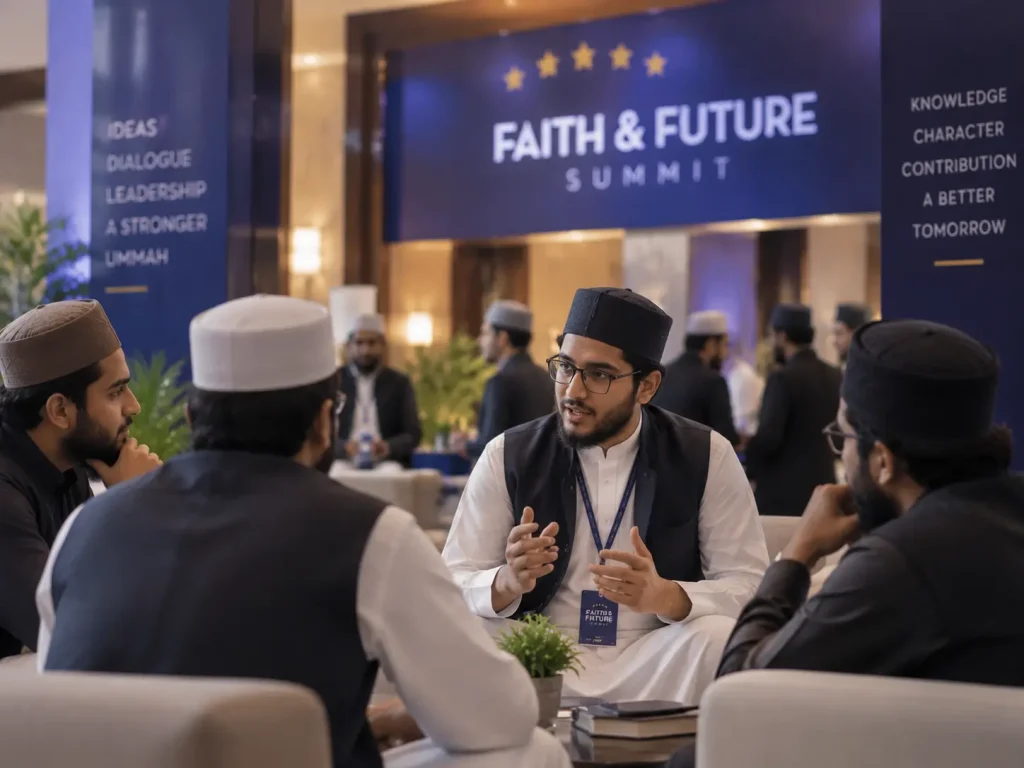
Personal development becomes more meaningful when you learn, reflect, and engage with people who share a similar vision of faith and responsibility.
The Faith & Future Summit 2026, organized by the School of Islamic Scholars & Leaders (SISL) and Al-Kawthar University, explores this connection through its theme:
“Beyond Self: A Vision for the Ummah.”
The summit brings together scholars, educators, and young minds to discuss how faith shapes personal responsibility, leadership, and contribution in the modern world.
Through discussions on purpose, character, and collective progress, the summit encourages participants to think beyond individual success and consider the impact they want their lives to create.
Cultivating Growth That Creates Lasting Impact
Self-improvement in Islam begins with refining yourself, strengthening your relationship with Allah, and developing qualities that shape the person you become.
Understanding your purpose in Islam changes the way you view success. Achievement becomes connected with responsibility, character, and the impact you create beyond yourself. Your education, skills, and ambitions gain deeper meaning when they are guided by faith and directed toward benefiting others.
Discovering this purpose requires reflection, learning, and conversations that challenge the way we think about growth and responsibility. The Faith & Future Summit 2026, centered around the theme “Beyond Self: A Vision for the Ummah,” brings together scholars, educators, and young individuals to explore how faith can guide personal development, leadership, and meaningful contribution.
Because true growth is not only about who you become, but also about the difference your life creates for others.
Frequently Asked Questions About Self-Improvement in Islam
How does Islamic self-improvement approach personal growth?
Self-improvement in Islam focuses on developing the inner self alongside outward actions. It includes strengthening faith, refining character, building discipline, and fulfilling responsibilities toward Allah and others.
Where should I begin if I want to improve myself?
Begin with small, consistent changes. Reflect on your daily habits, strengthen your relationship with Allah, improve your character, and gradually build routines that support your responsibilities.
Can career ambitions be part of Islamic personal development?
Yes. Seeking knowledge, developing skills, and building a career become meaningful when they are guided by sincere intentions and used responsibly.
How should I respond when I struggle with consistency?
Growth includes moments of difficulty. Returning to your goals, reflecting on your mistakes, and continuing with patience are essential parts of personal development.
Why is serving others important in Islam?
Serving others reflects the purpose behind personal growth. The abilities and opportunities you develop become a means of benefiting your family, community, and society.